At the SHARE Lab, our mission is to integrate human and artificial intelligence across various fields, including architectural design, structural engineering, disaster response, and public health. To achieve these goals, we have launched projects in close collaboration with industry partners such as NVIDIA, MARK III, AUTODESK, and SIEMENS. Each project is focused on enhancing community resilience in response to environmental challenges and public health issues.

Our research is showcased through videos and posters, offering a glimpse into the diverse work at the SHARE Lab. Explore our projects to uncover the innovative solutions and insights we are developing utilizing Artificial Intelligence in Built Environment Practices.

Videos

______

Videos ______

Digital Twins and GenAI.

The SHARE Lab explores the rapidly evolving field of Digital Twins, focusing on how this technology is applied across various scales—from buildings to city-wide infrastructure. Digital Twins combine real-time data, simulations, and AI to create virtual replicas of physical systems, enabling consensus-making, predictive modeling, and efficiency across domains.
We have developed a Digital Twin of the university's buildings to model energy consumption patterns and identify areas for energy-efficiency improvements. By analyzing this data, we aim to provide actionable recommendations to reduce energy use and promote sustainability across campus. This innovative project prominently features the Ramos Collaboratory, showcasing our commitment to advancing energy sustainability and efficiency in higher education. Through these efforts, we hope to not only enhance the operational performance of our facilities but also contribute to a greener future for our community.

Karla Saldana elaborates on the vision behind the SHARE Lab, emphasizing its role in advancing research and innovation in artificial intelligence. She clarifies the distinction between AI tools, which are designed to assist in specific tasks, and AI instruments, which provide deeper insights and enable more comprehensive analysis. Additionally, Saldana shares her motivation for working on AI for social good, highlighting the importance of leveraging technology to address societal challenges and improve the well-being of communities. Through her work, she aims to foster a more equitable future by employing AI in ways that positively impact society.

Karla Saldana elaborates on the SHARE Lab's work with Digital Twins, a concept that encompasses a wide range of applications, from modeling individual buildings to replicating entire cities. She highlights how these digital representations can enhance urban planning, improve energy efficiency, and facilitate smarter decision-making processes. By creating accurate virtual models, the SHARE Lab aims to better understand the interactions within urban environments and promote sustainable development. Saldana emphasizes the importance of collaboration among stakeholders to fully realize the potential of Digital Twins to create more resilient and adaptive cities in the future.

This brief video highlights various applications of augmented reality (AR) in conjunction with digital twin platforms. It showcases how AR technology enhances the visualization and interaction with digital twins, providing real-time insights and improving decision-making in various industries. Through engaging demonstrations, the video illustrates the benefits of combining AR and digital twin technology, making complex data more accessible and interactive for users.

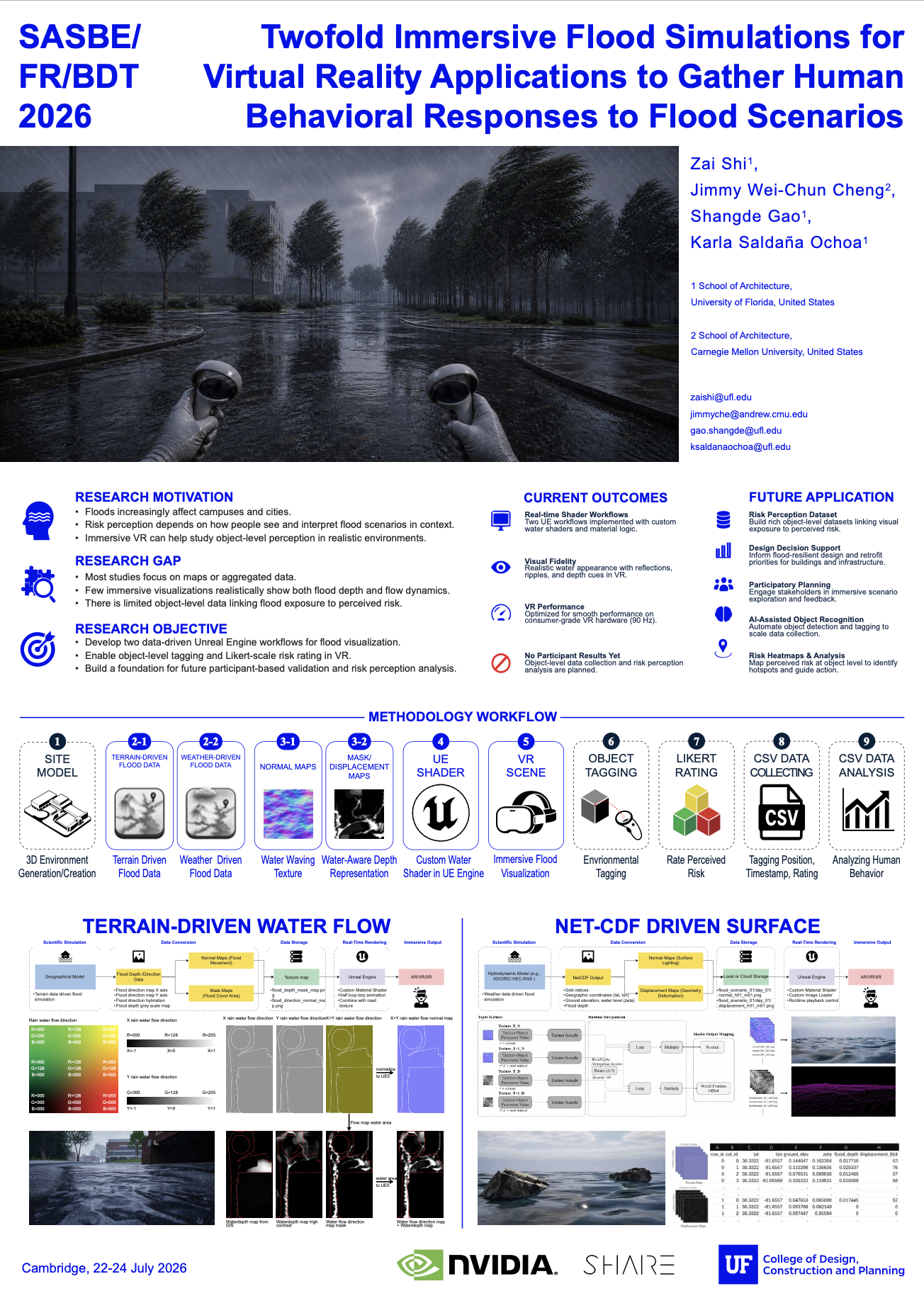
We are developing Digital Twins to create decision support tools specifically for the University of Florida (UF) campus. Funded by UFIT and NVIDIA NVAITC, this project aims to leverage advanced modeling techniques to simulate real-world scenarios, allowing for enhanced analysis of flood risk and its impacts. By incorporating human perceptions and experiences related to flood risk, we strive to create a more holistic understanding of the vulnerabilities faced by the campus community. This approach not only aids in decision-making processes but also helps engage stakeholders in meaningful discussions about flood preparedness and resilience planning, ultimately contributing to a safer and more informed environment for all.

This is a short interactive game developed on a digital twin platform, designed specifically to provide effective training for navigating emergency exits. The game simulates real-life scenarios, allowing users to practice their response in a safe and controlled environment. Through engaging gameplay, participants can learn important skills and procedures, ensuring they are better prepared to exit safely during emergencies.

This initiative is a university-wide effort focused on developing urban digital twins, with Jaxtwin serving as a prominent example, representing the city of Jacksonville. The project has created a user-friendly web-based interface that seamlessly integrates multiple models and data sources, providing urban planners and designers with an advanced design support tool. Ultimately, this tool seeks to enhance urban planning processes, enabling better decision-making, improved resource management, and more sustainable urban development, while allowing city officials, researchers, and the community to visualize and analyze urban changes, thereby fostering smarter city planning and improving the quality of life for residents.

A virtual reality platform that integrates generative algorithms for designing living shorelines. This platform evaluates the environmental outcomes of adding elements such as oyster castles or reeds, with a specific focus on their impact on nitrogen assimilation in the water.

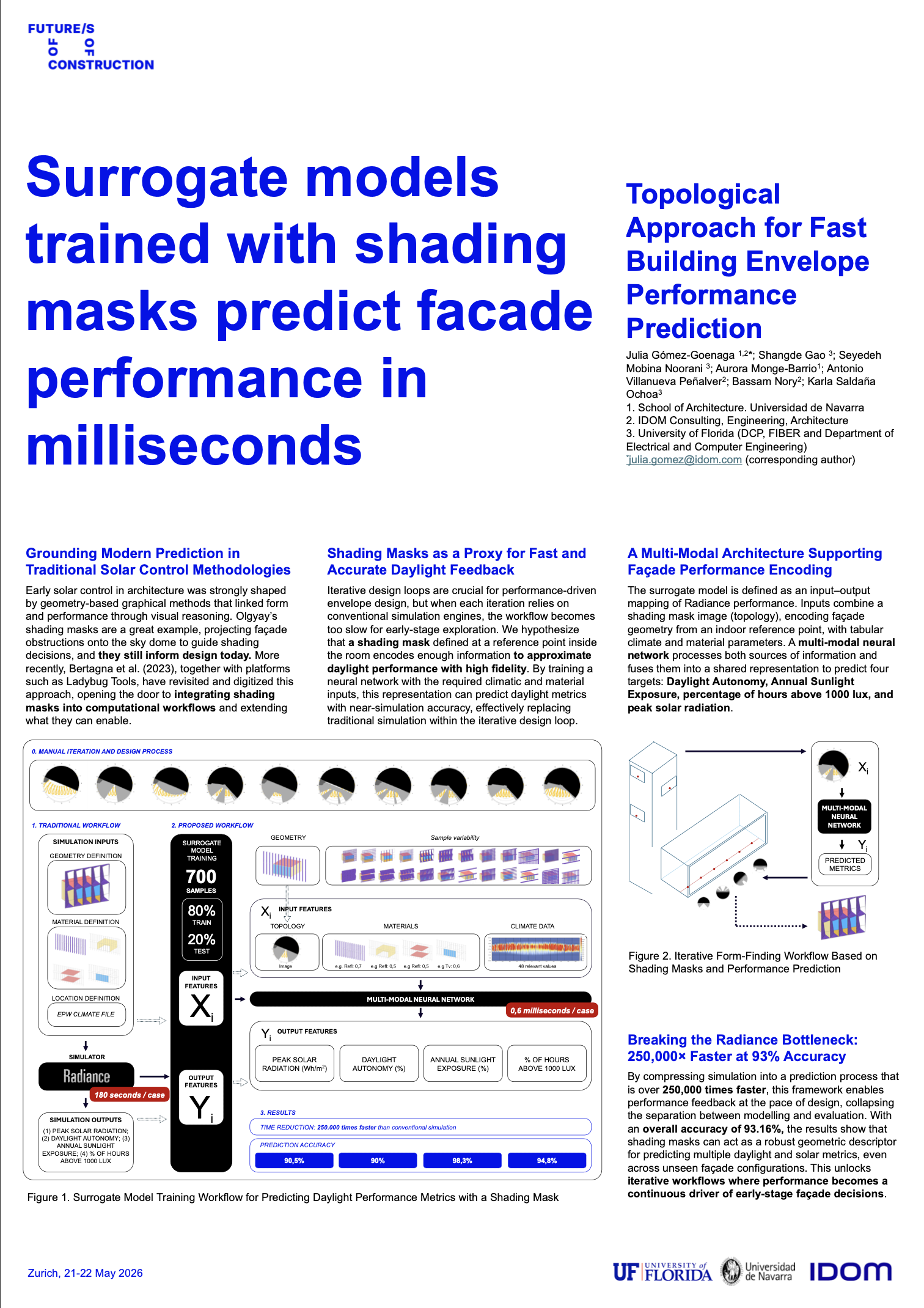
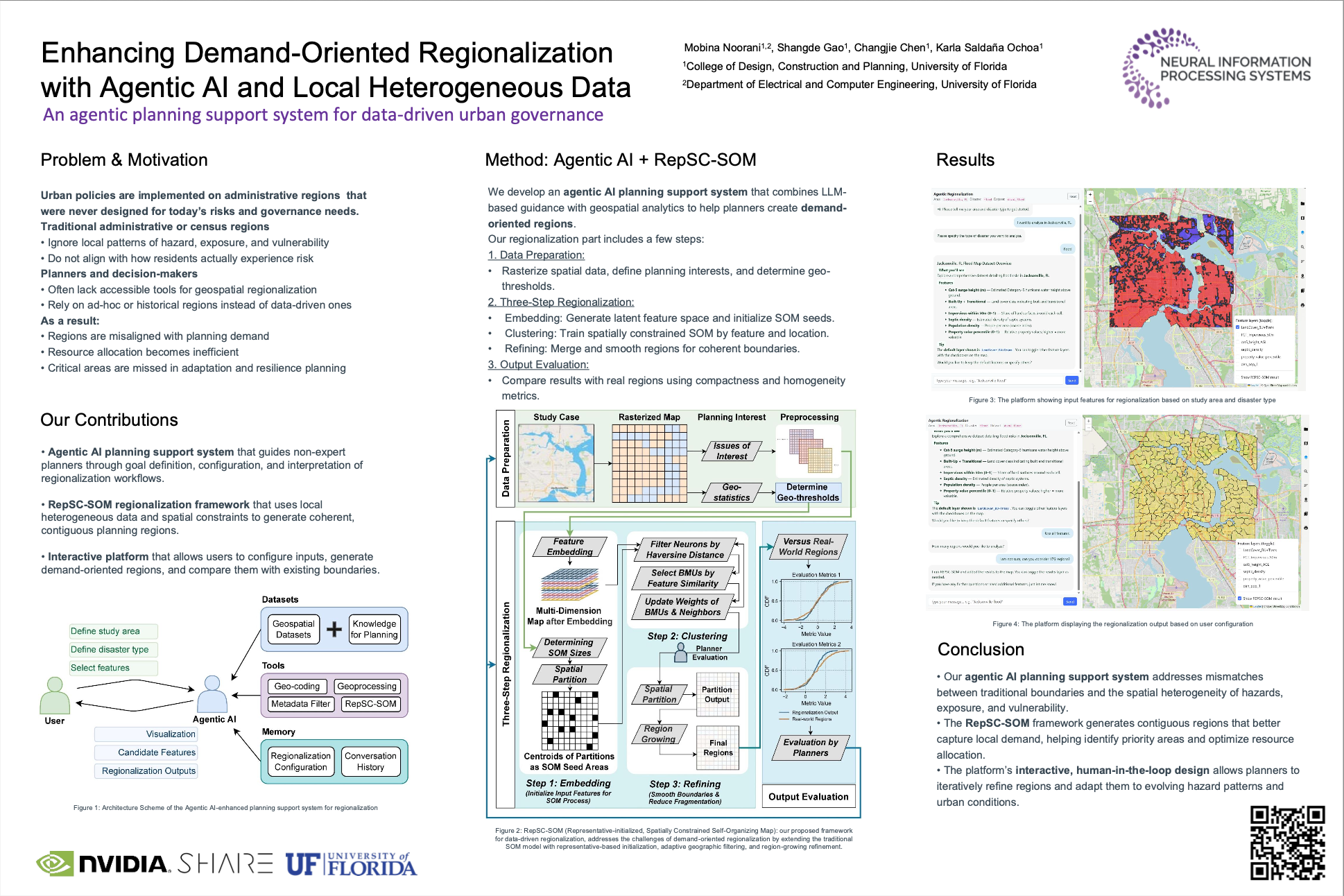
A recent article in Nature Scientific Reports introduces a machine-learning pipeline that creates data-driven regions for decision-making through multimodal data fusion.

 A brief video that highlights the features and capabilities of a generative structural design tool. This video showcases how the tool can create innovative and efficient designs by leveraging algorithms to generate complex structures. It serves as a visual demonstration of the potential applications and benefits of using such technology in architecture and engineering.

This demo showcases an Agentic AI tool developed in collaboration with the Jacksonville Transit Authority. The tool aims to improve network efficiency and service equity by utilizing real-world data. It helps inform decisions about which stops and routes to modify, add, or remove.

Posters

______

Posters ______