DIGITAL WORKFLOWS FOR INFORMED DECISION MAKING IN BUILDING ENVELOPE DESIGN
A Systematic Literature Review
In collaboration with Julia Gómez Goenaga, Aurora Monge, and Antonio Villanueva Peñalver
This study systematically reviews the methods and workflows proposed across 152 publications selected following the PRISMA methodology. The aim of the review is to understand the logic behind the optimization parameters and to frame them within a design methodology. Alternative decision-making approaches and process outputs are also reviewed, considering interaction and real impact on the decision maker or designer. The analysis leads to a proposed digital framework that integrates design parameters, data generation, and decision-making processes, leveraging AI-based tools to enhance optimization tasks. Complementing this framework, two matrices are introduced: one defining relevant performance metrics according to the design scale, and another, derived from the first, identifying the variables to be addressed across different stages and scales of the process. This combinatorial and sequential framework provides the foundation for adaptable, user-centered, digital optimization workflows for BE design aimed at improving building performance and occupant comfort.
1. Introduction
1.1. Background
The design of building envelopes (BE) has emerged as an increasingly complex and multidisciplinary challenge. Greater emphasis on sustainability has led to stricter regulatory standards and an increased demand for higher performance from envelope construction systems. BEs play a big role in building design, not only as the key interface between the building and its environment but also in determining the aesthetics and concepts of the architecture.
Facades have become the focus of optimization efforts because of their large influence on design, construction costs, and operational energy consumption. Enhancing performance while preserving architectural intent makes BE design require the consideration of diverse and often conflicting criteria.
1.2. Related review studies and state of the art
BE design has been studied from different angles, including optimization algorithms, simulation tools, performance objectives, and design variables. Some studies combine performance, design, and optimization techniques to work together.
Recent research in performance-based design reveals three main trends in methods:
(1) integrated or sequential optimization processes that progressively refine workflows and can be run simultaneously;
(2) complete algorithmic workflows that are flexible enough to operate together across all phases of the optimization process; and
(3) effective management of simulation outputs for exploratory decision-making.
Together, these trends illustrate a broader shift toward adaptive, interpretive, and designer-oriented performance workflows that balance computational optimization with creative exploration.
1.3. This review
We focus on the specific articulation of how tools, algorithms, objectives, and variables are embedded and interact within design workflows, which has not yet been sufficiently addressed. Rather than examining optimization problems in isolation, this study adopts a perspective on how methods should analyze such elements as parts of larger, iterative, and context-dependent design strategies.
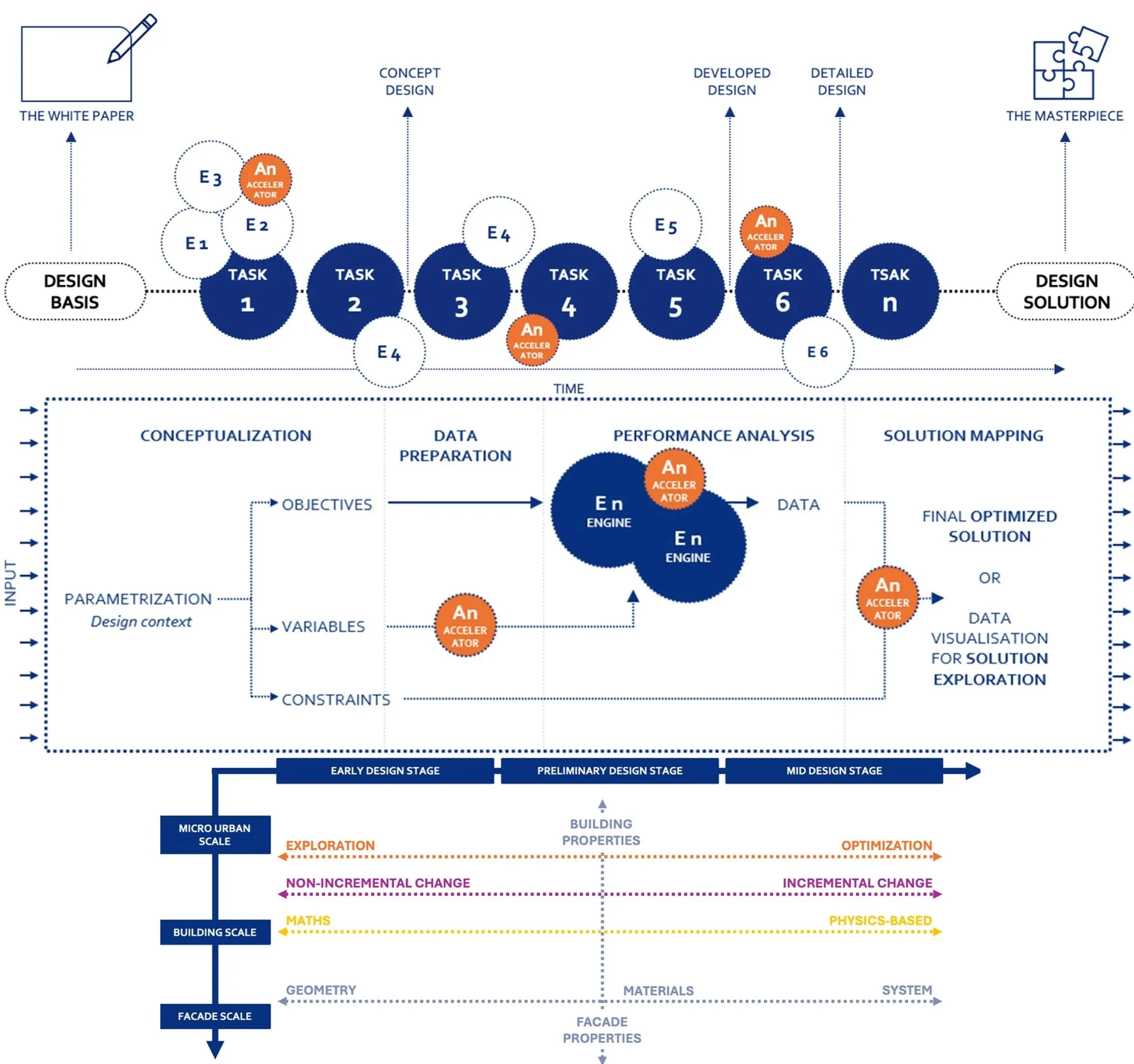
The main objective of this review is to identify the structure of methods for each optimization approach in relation to its design context, revealing how optimization is not a purely technical exercise but an integral component of design. Particular attention is given to sequential optimization processes, which establish distinctive workflows suitable for extracting patterns of methods and assessing their adaptability to different design conditions. We are helping develop a flexible framework for integrating optimization into architecture without limiting design with rigid constraints.
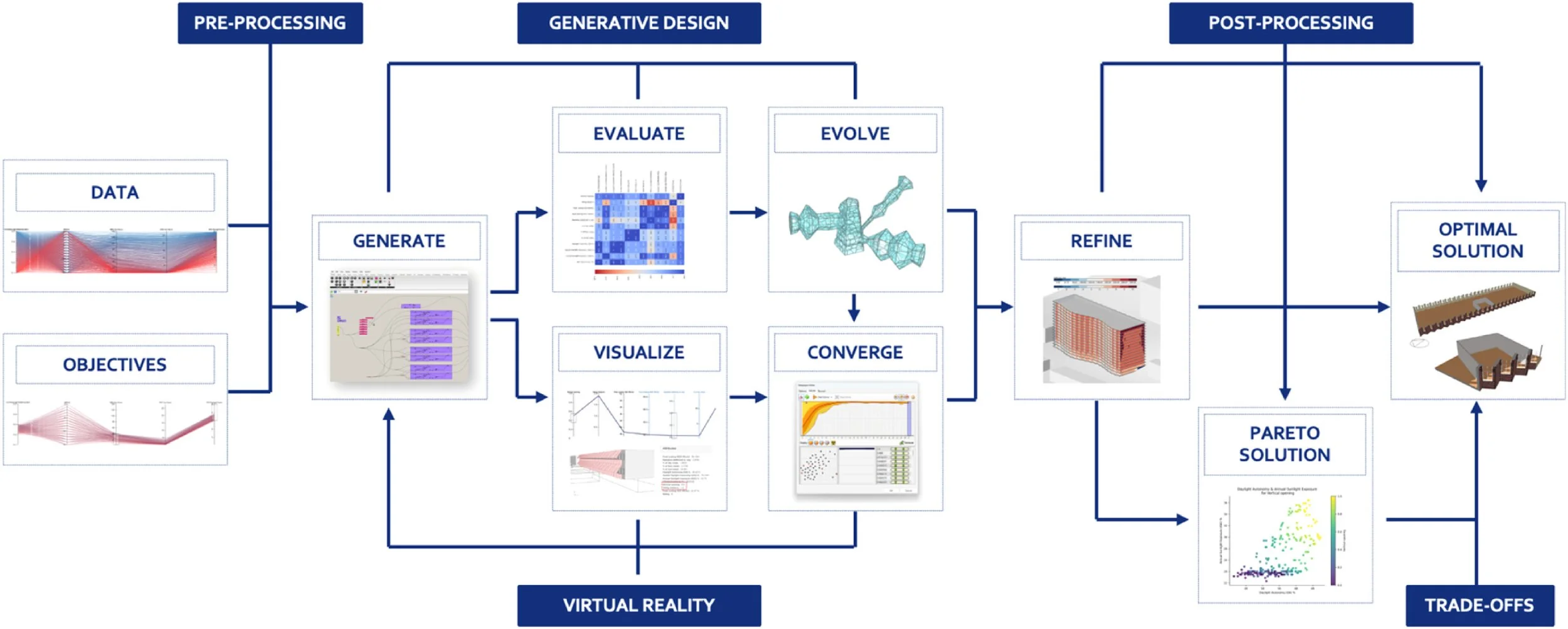
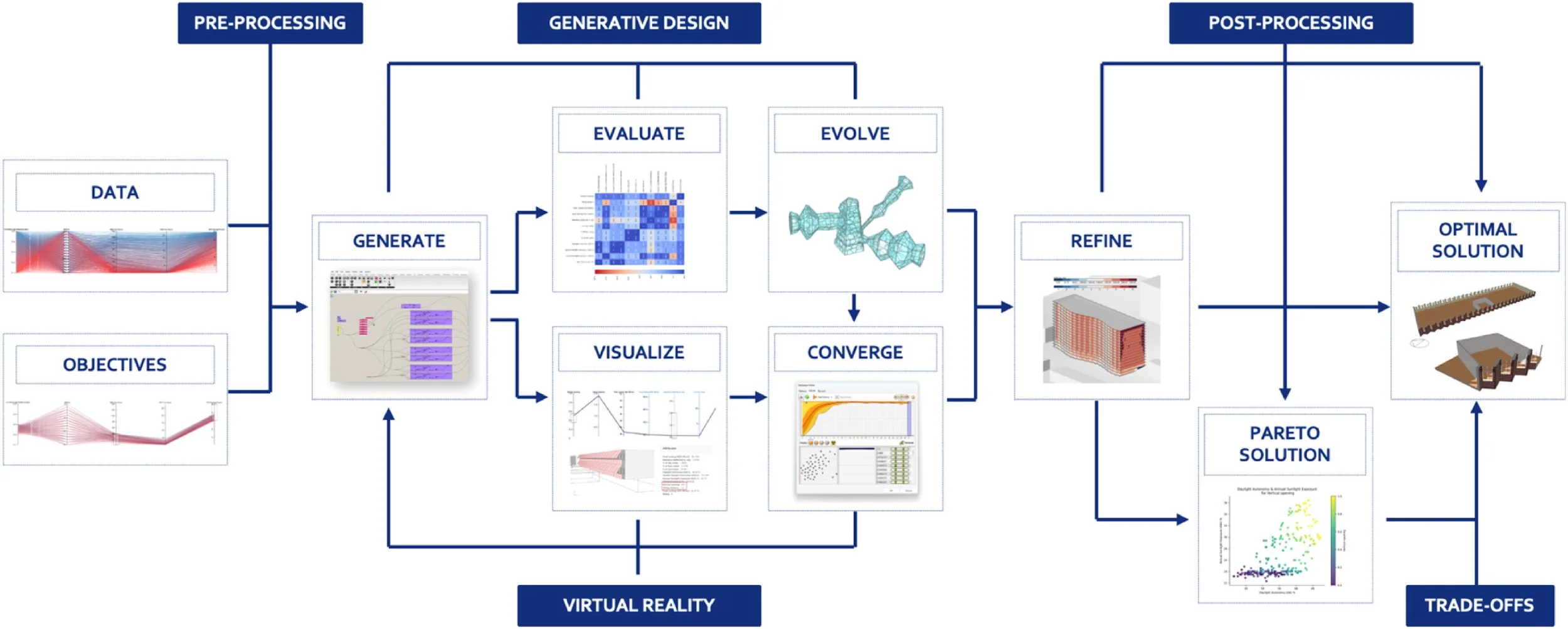
Fig. 1. Performance-oriented design workflow.
2. Systematic Literature Review Methodology
2.1. Screening Workflow
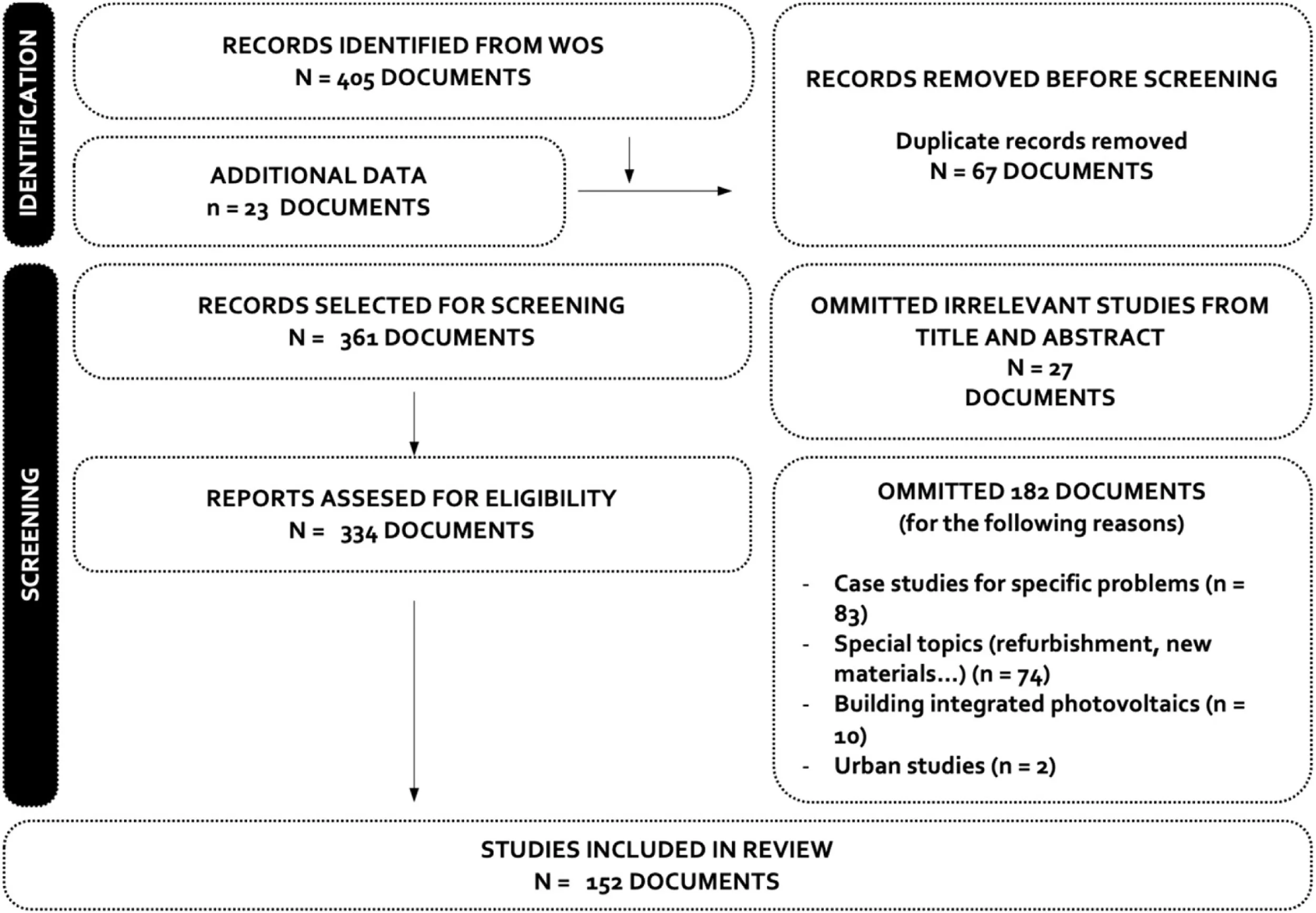
Table 1 summarizes the search process, adhering to key concepts such as multi-objective optimization, performance-driven design, envelope design tools, and the application of AI in façade design. The review uses the PRISMA structure (Figure 2). Following a second screening that removed irrelevant studies, a total of 152 articles were included in the final analysis, forming the core literature reviewed in this study.
Table 1
Search queries used in the review process.
Search 1
Query: Building AND (facade OR envelope OR shading) AND (multi-objective OR multicriteria) AND optimization AND (methodology OR workflow OR tool OR method OR framework OR roadmap) AND performance AND (based OR driven OR oriented) AND design NOT adaptive NOT kinetic NOT review
Scope: Abstract
N of articles: 218
Search 2
Query: building AND (facade OR envelope OR shading OR skin) AND (many-objective OR multiobjective OR multi-criteria) AND ((artificial AND intelligence) OR ai OR generative OR metaheuristic OR algorithm OR (neural AND networks) OR (machine AND learning)) AND (performance OR goal OR data) AND (based OR driven OR oriented) AND optimization AND (process OR methodology OR workflow OR tool OR method OR framework OR roadmap) AND (design OR (parametric AND design)) NOT adaptive NOT kinetic NOT review
Scope: All fields
N of articles: 187
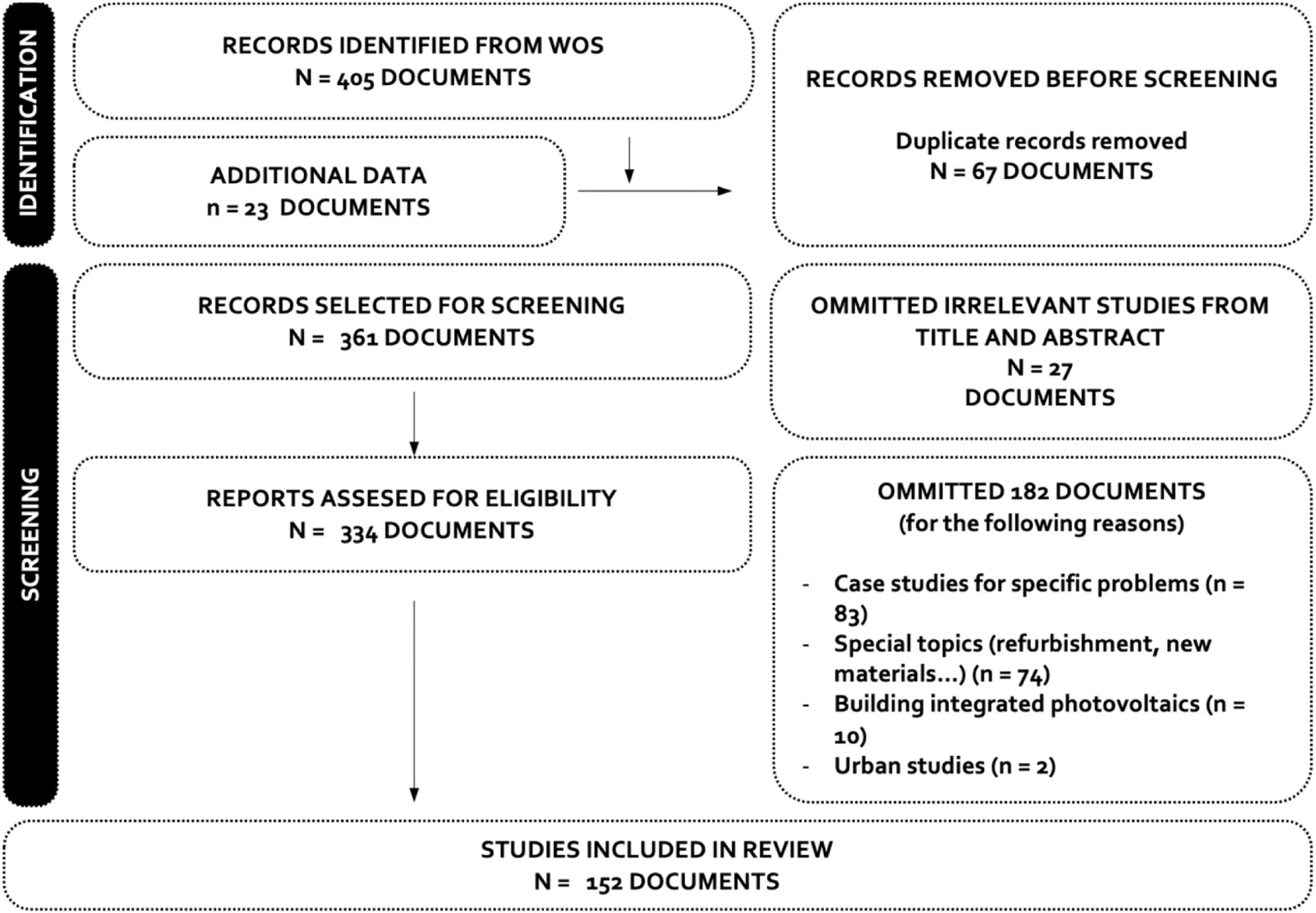
Fig. 2. PRISMA diagram of the screening workflow for the review.
2.2. Subdivision of optimization problems in design tasks
An optimization loop is created by repeating the optimization process or enriching it with new design perspectives until the defined objectives are reached.
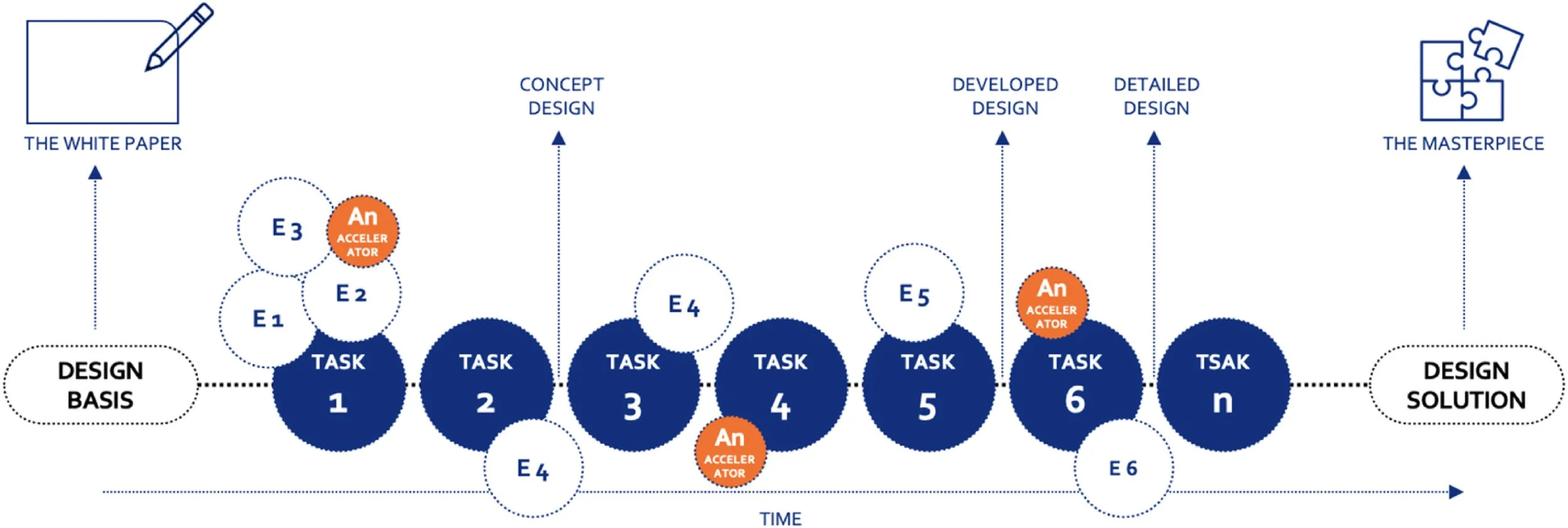
From the initial conception to generating a design solution, several design tasks may be undertaken to reach the optimal solution, as illustrated in Fig. 3. A task is defined as each step in which the variables or performance objectives are modified for a new process. During the problem-solving process, performance objectives are assessed, requiring the integration of simulation engines. Furthermore, incorporating intelligent algorithms into optimization workflows has introduced various accelerators across the analyzed tasks that assist and expedite problem-solving. Further details on these aspects will be provided in Section 3.
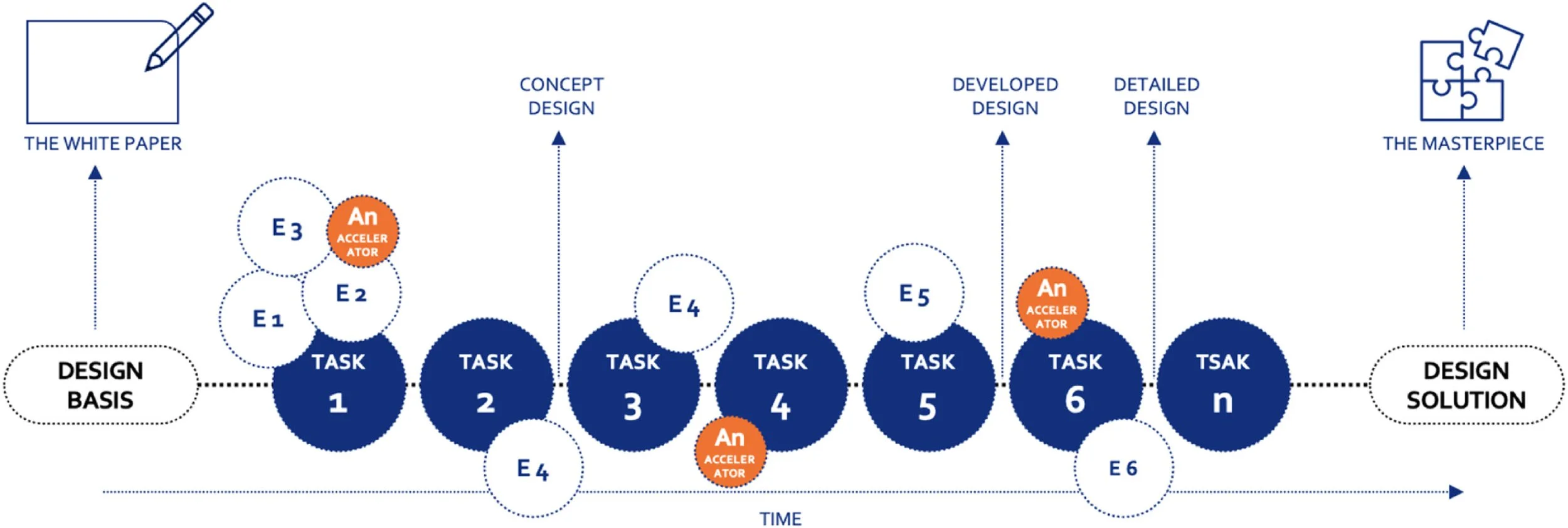
Fig. 3. Consecutive and sequential nature of task development for Performance-Driven Design. A task is defined by its design inputs and following some defined steps it produces the expected outputs for the subsequent task.
These considerations have structured the analysis of the reviewed literature.
Eighteen of the 152 articles were excluded, including literature reviews, repeated processes, or purely theoretical approaches. The remaining articles were broken down into their respective tasks. This breakdown resulted in the analysis of 155 distinct tasks and 134 different methods.
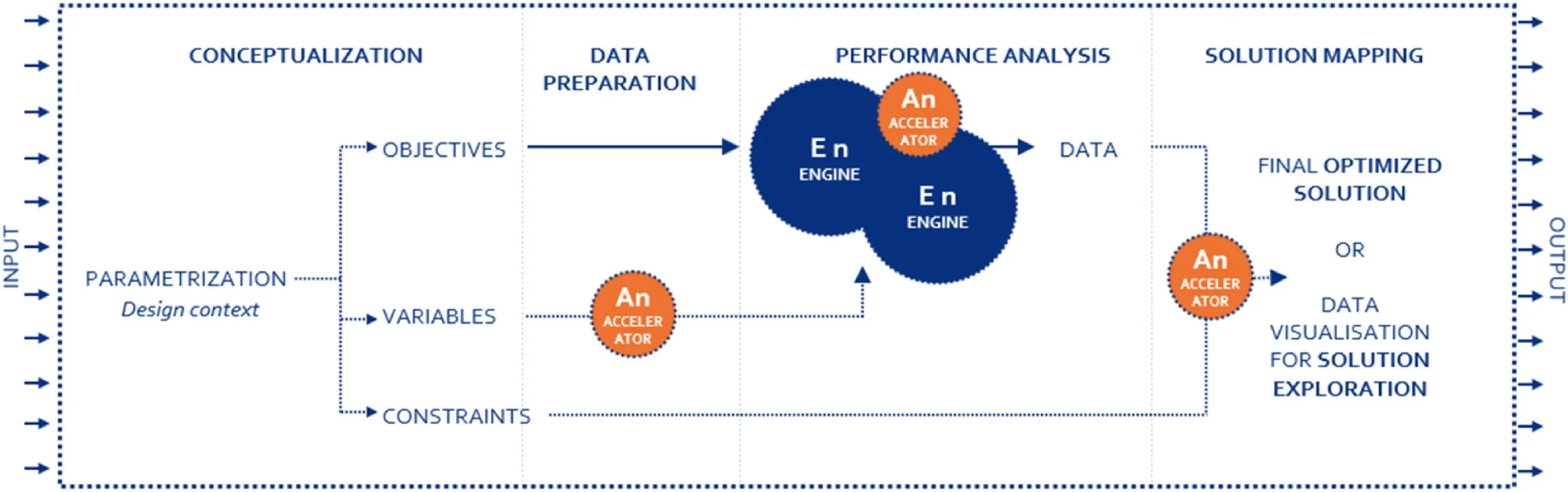
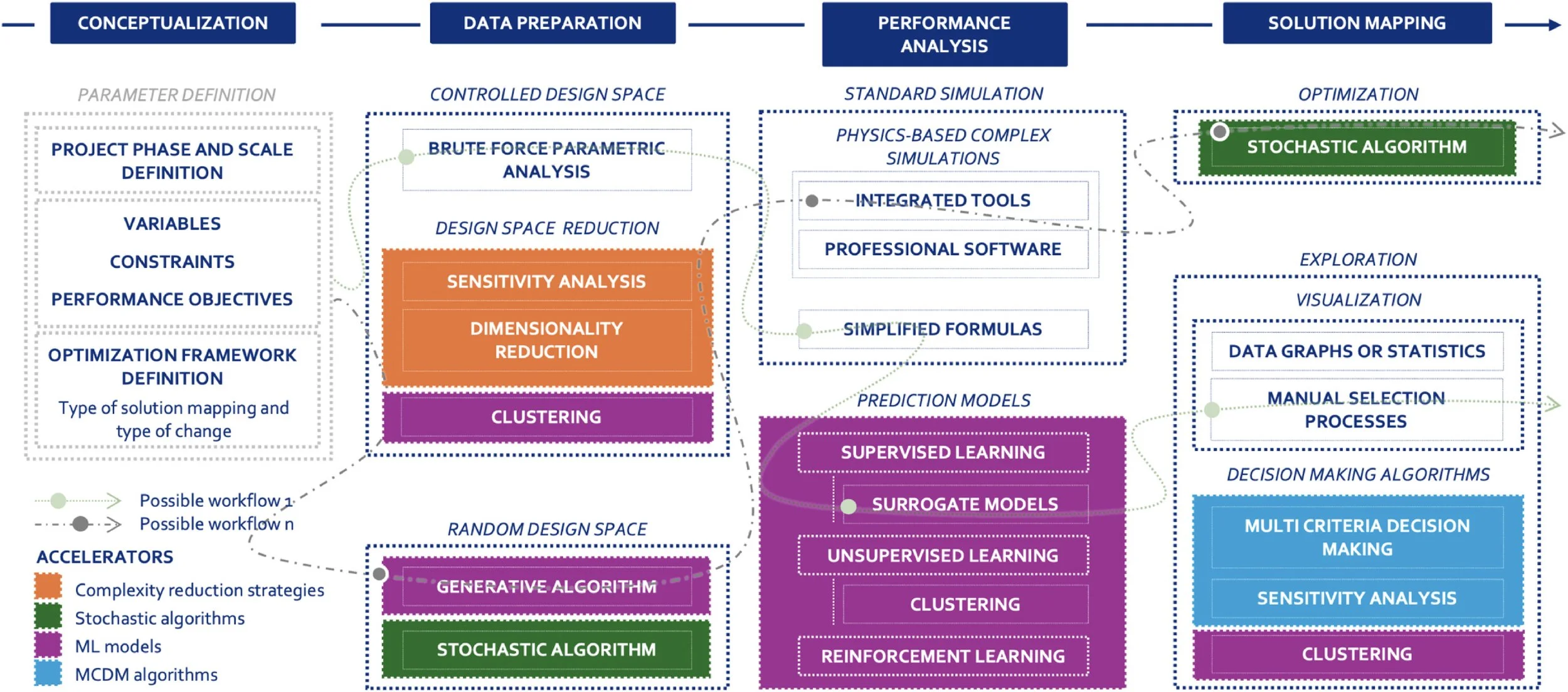
A methodological framework is proposed, identifying and organizing the key processes involved in multi-objective design tasks. The framework is structured around four core phases: (1) Conceptualization, (2) Data Preparation, (3) Performance Analysis, and (4) Solution Mapping, as shown in Fig. 4. AI algorithms (or accelerators) are integrated across the outlined phases for different functions.
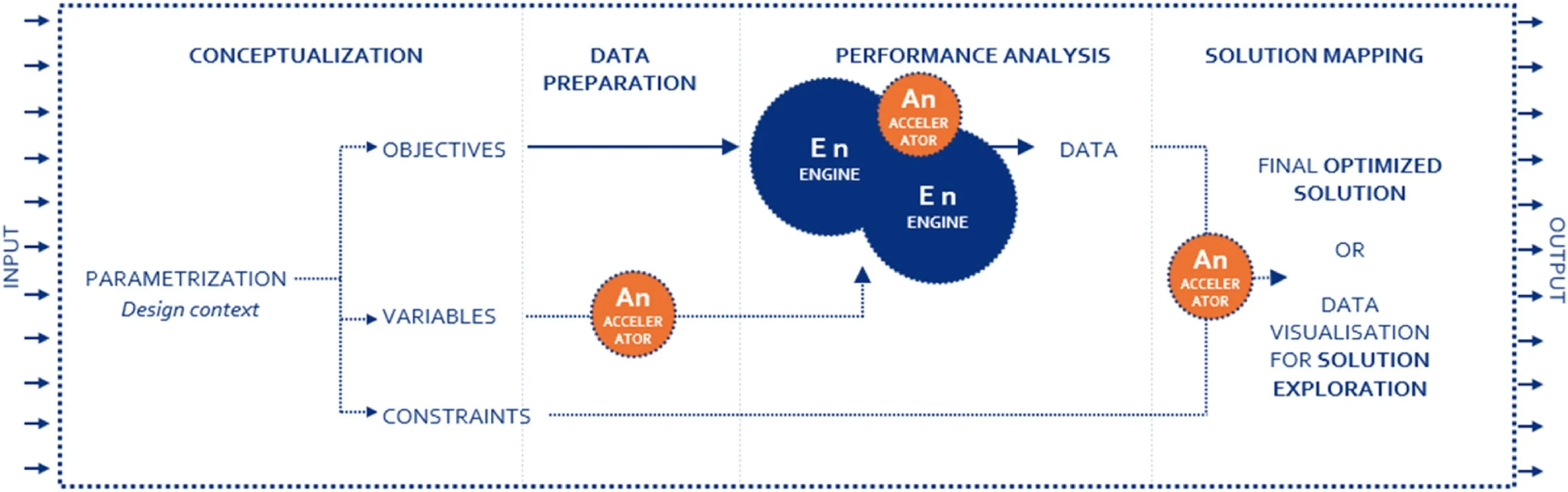
Fig. 4. Main components in task development for performance-driven optimization workflows.
Conceptualization: This step involves defining the problem context. The designer identifies the problem’s phase and scale, as well as the key parameters: variables, constraints, and objectives.
Data Preparation: In this phase, a dataset is generated for subsequent analysis using a controlled or random approach.
Performance Analysis: During the performance analysis phase, the outcomes of design alternatives are evaluated based on the predefined metrics using direct evaluation with algorithms or standard simulation tools.
Solution Mapping: The final phase involves interpreting and selecting optimal or desirable solutions.
The following sections detail how this review examines the methodologies that guide the design process. Eight main categories have been identified to classify the corresponding methods correctly, as summarized in Table 2.
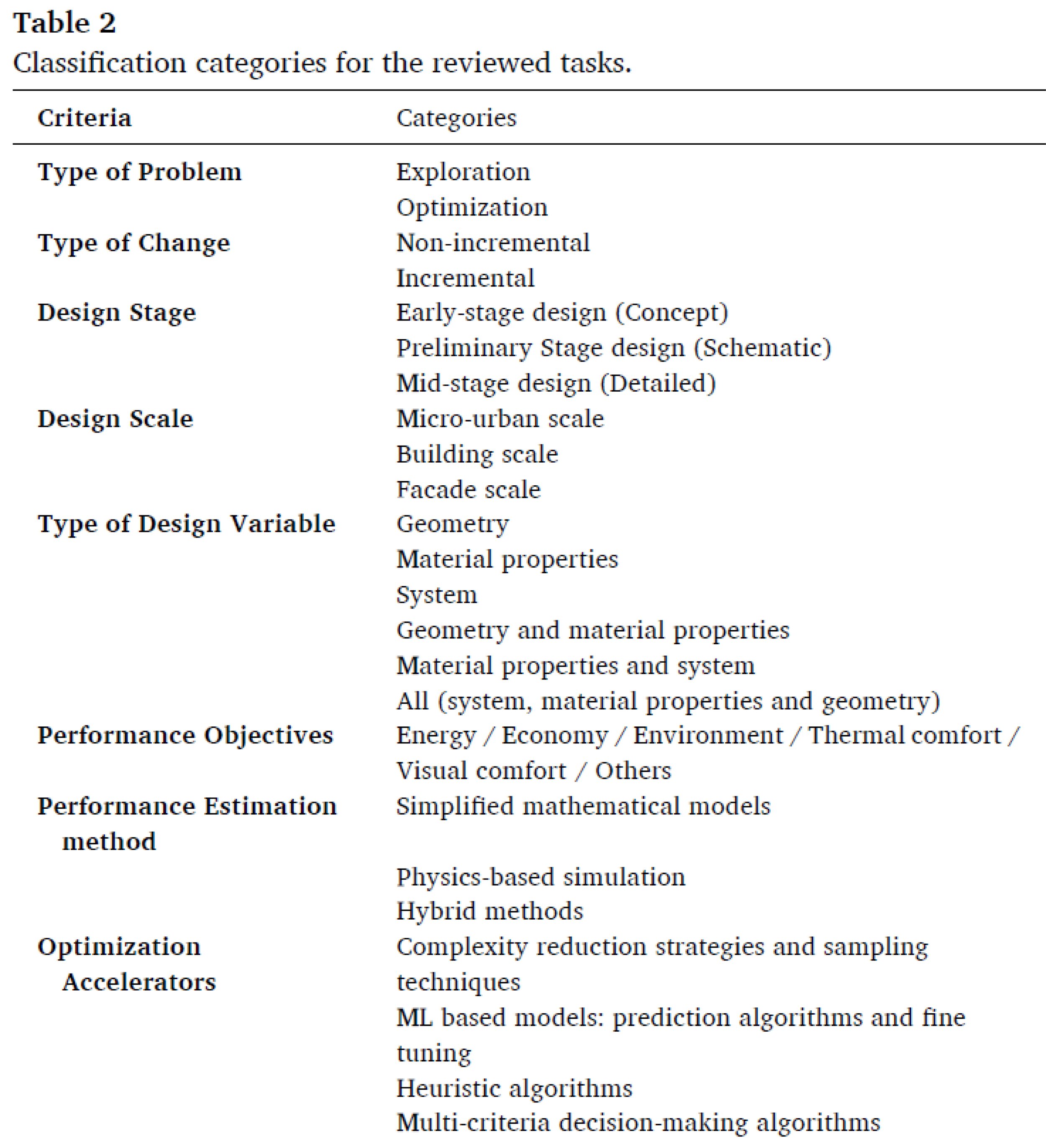
Table 2 Screenshot
3. Classification Process
3.1. Type of Design Variables
BE performance-driven optimizations can be oriented toward the design of many different elements of the building. In this article, three types of variables (geometry, material properties, and systems) are identified and combined with mixed-variable approaches for the analysis.
In the 134 analyzed methods, the types of variables targeted show distinct trends, with geometry and material properties optimized in a high percentage of studies and an apparent underrepresentation of active or system-based strategies in optimization workflows focused on BE design.
Performance-driven digital design in the context of BE enables the optimization of multiple design objectives.
This article structures and reorganizes the proposed criteria, considering the main structure presented in a comprehensive review of the main façade performance criteria, and incorporates some other interesting criteria obtained from other reviews.
3.2.1. Performance Objective Classes: Frequency and Combination
Among the optimization categories, energy-related objectives are the most frequently analyzed, followed by combined studies addressing energy and thermal comfort, and then those coupling energy with visual comfort. With three-variable combinations, energy analyses frequently serve as a central component in multi-objective optimization studies. This is likely due to their foundational role in calculating both carbon emissions and cost, and their capacity to reflect overall building performance. As such, energy simulation engines can serve as powerful tools to streamline performance evaluation processes.
Therefore, a more comprehensive approach that includes comfort and daylight analysis could be recommended. This leads to the other common combination: (1) Energy + thermal + visual comfort. With this, all the presented categories are possible performance objectives during BE multi-objective optimizations.
On the other hand, two specific combinations are highly remarkable. (2) Energy + economy + environment offers an overall perspective on basic resource management and highlights the importance of incorporating critical insights into user experience and well-being.
Therefore, a more comprehensive approach that includes comfort and daylight analysis could be recommended. This leads to the other common combination: (1) Energy + thermal + visual comfort. With this, all the presented categories are possible performance objectives during BE multi-objective optimizations.
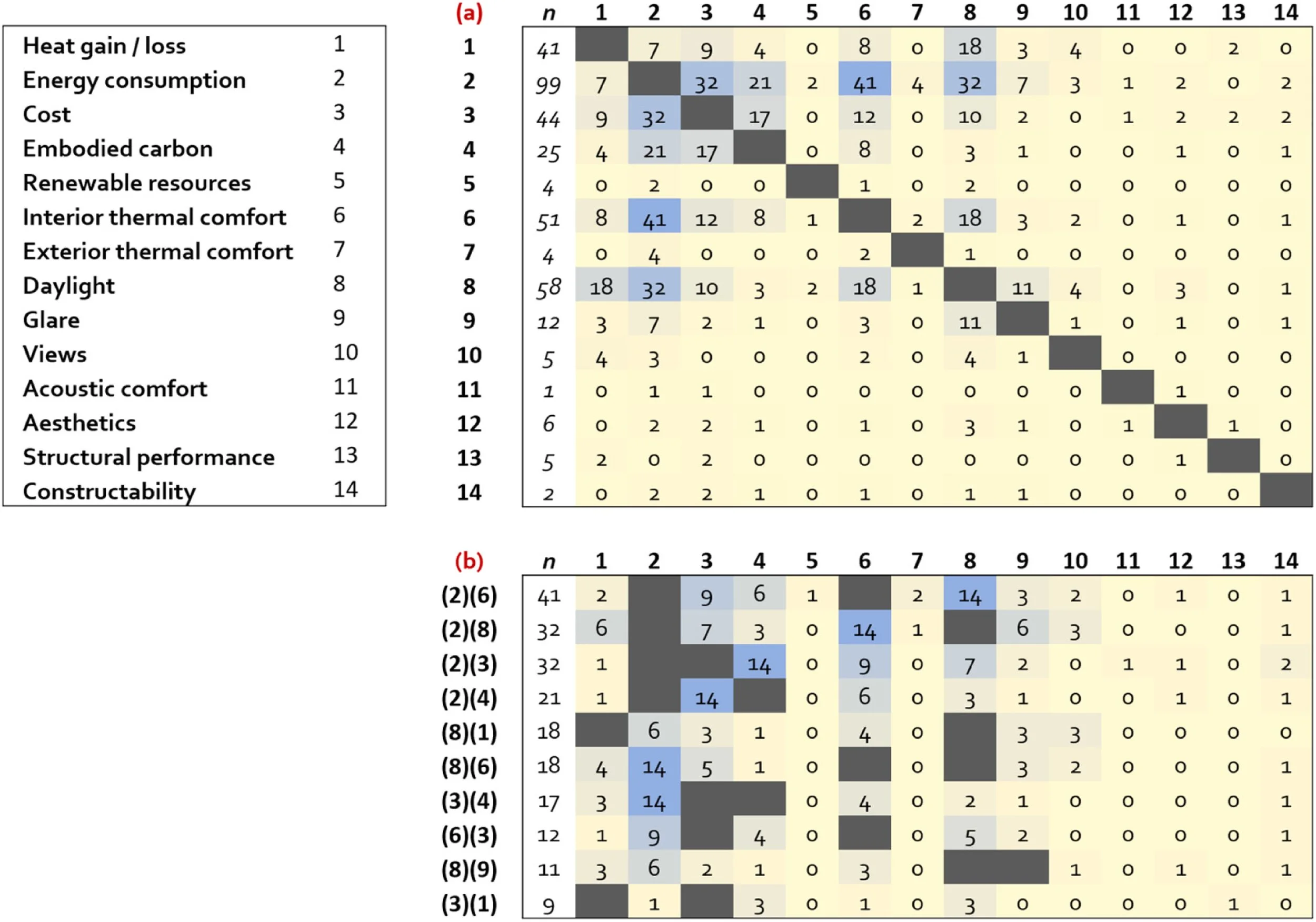
To reveal the intrinsic relations between specific performance classes, the same analysis has been conducted in detail. This is shown in Fig. 5.
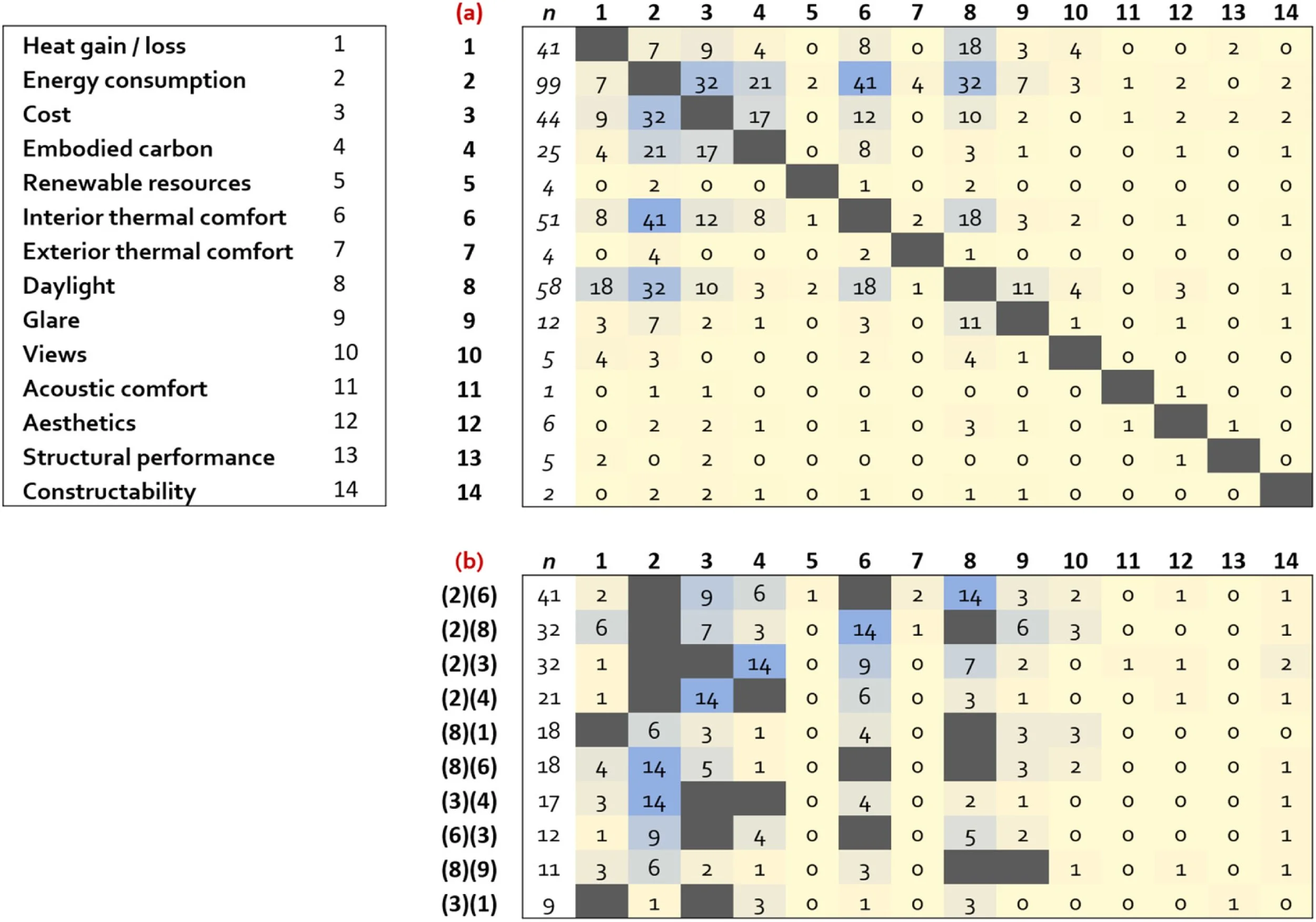
Fig. 5. (a) Individual count of each performance objective and dual combinations (b) Dual frequency count of the ten most common performance objectives and count of triplets.
Among the analyzed tasks, energy, daylight, and interior thermal comfort are the most used performance classes, followed by cost, heat gain/loss, and embodied carbon.
Even though energy and interior thermal comfort are the most represented objectives, glare can still be considered a relevant element in the optimization process.
It is evident that frequency measures can provide clues on interesting combinations but barely guide the optimization objectives that should be used in each case. It can be stated that these depend on the designers’ interests and objectives.
Structural performance, visual comfort from views or glare, acoustics, and exterior comfort are understudied.
Finally, aesthetic considerations are not generally integrated into optimization. This may result from aesthetics being addressed during the earlier stages of conceptualization and exploration; however, it may also reflect a lack of methodological integration, where aesthetics is not treated as a quantifiable or optimizable criterion. Recent research has shown that aesthetic qualities can be incorporated into performance-driven workflows.
Only future climate scenarios are addressed within the reviewed tasks, overlooking uncertainties such as shading and other dynamic aspects that evolve over a building’s lifespan.
Relevance, computing time, and project needs should inform the performance metrics used, but such a division cannot be found due to a lack of clear guidance for each phase of design.
3.2.2. Performance Estimation Method
The problem of computing time and precision is addressed through the classification of performance estimation methods. Design performance is often assessed using physics-based simulations via specialized software. To streamline the process of performance assessment, some researchers use simplified mathematical models or hybrid methods combining simulations with analytical formulas to balance accuracy and computational efficiency.
Among the different performance estimation methods analyzed, physics-based simulations are the predominant approach, with particularly high use in early design stages. However, among physics-based simulations, some are simply ray-tracing processes that only consider geometry rather than complex thermo-physical simulations.
Nevertheless, ML appears as an interesting tool to reduce computing time for complex physics-based simulations. To this extent, surrogate models based on supervised or unsupervised learning are commonly used among researchers.
To reduce computing time while aligning with broader design goals, performance objectives and simulation processes must be appropriately addressed depending on the design phase, scale, or specific context.
3.3. Optimization Accelerators
In the context of BE design, optimization algorithms are typically derivative-free. However, some geometric tasks, such as determining shading angles, may still benefit from derivative-based methods. A key distinction lies in their search strategy: deterministic (classical) algorithms follow a predefined path, whereas stochastic methods introduce randomness to better explore the search space. Within the stochastic category, metaheuristic algorithms are widely used for performance-driven design exploration.
Population-based algorithms play a crucial role in multi-criteria decision-making (MCDM) contexts, as they can simultaneously evaluate multiple candidate solutions and represent trade-offs among conflicting design objectives. These visual outputs, often complemented by performance graphs, enhance understanding of design spaces and support decision-making by balancing exploration and optimization.
Beyond their structural classifications, optimization algorithms should also be evaluated based on three performance criteria: their ability to avoid local optima, their efficiency (computational time), and their capacity to maintain diversity among solutions.
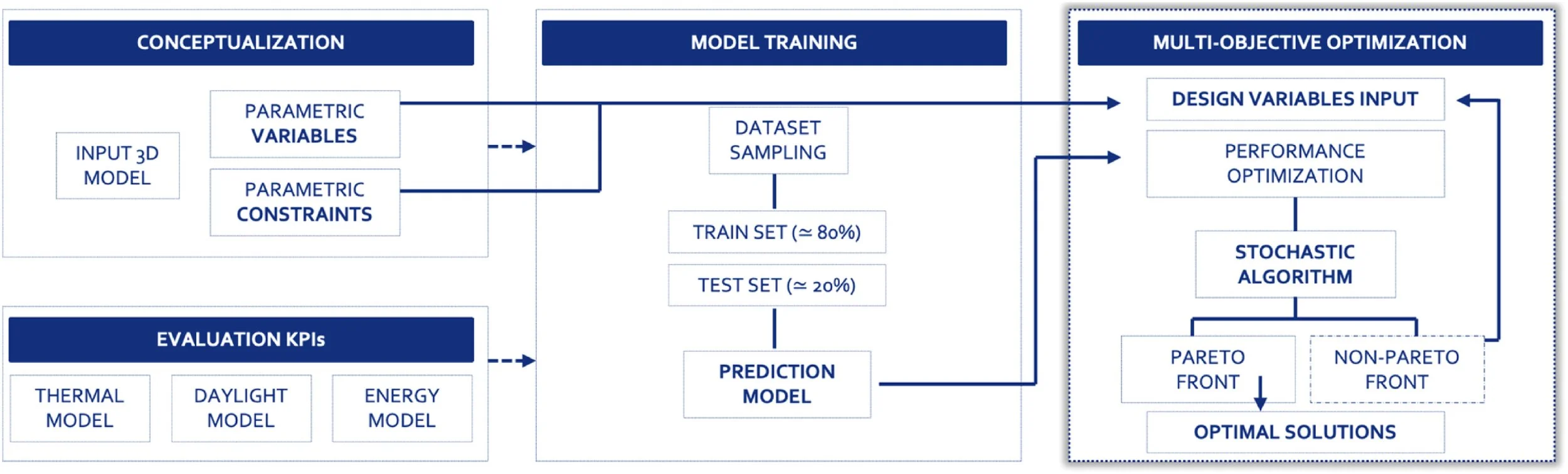
The integration of machine learning (ML) has further expanded the scope of optimization strategies. ML, a subfield of AI, learns from data to make predictions and is generally divided into supervised, unsupervised, and reinforcement learning approaches. Within BE design, ML and deep learning (DL), based on artificial neural networks, are increasingly used as mathematical models to approximate simulation outputs, accelerating search processes in the early stages of design when thousands of iterations are required.
In this article, accelerators refer to the set of tools and techniques that reduce computational time while maintaining alignment with design objectives. Four main accelerator types are identified: (1) complexity reduction strategies, (2) model training techniques, (3) stochastic algorithms, and (4) multi-criteria decision-making methods.
Complexity reduction strategies reduce the number of variables or design combinations during data preparation and may also facilitate data post-processing during decision-making, often with algorithms.
There are a number of complexity reduction strategies, such as sensitivity analysis and unsupervised ML clustering.
3.3.2. Stochastic algorithms
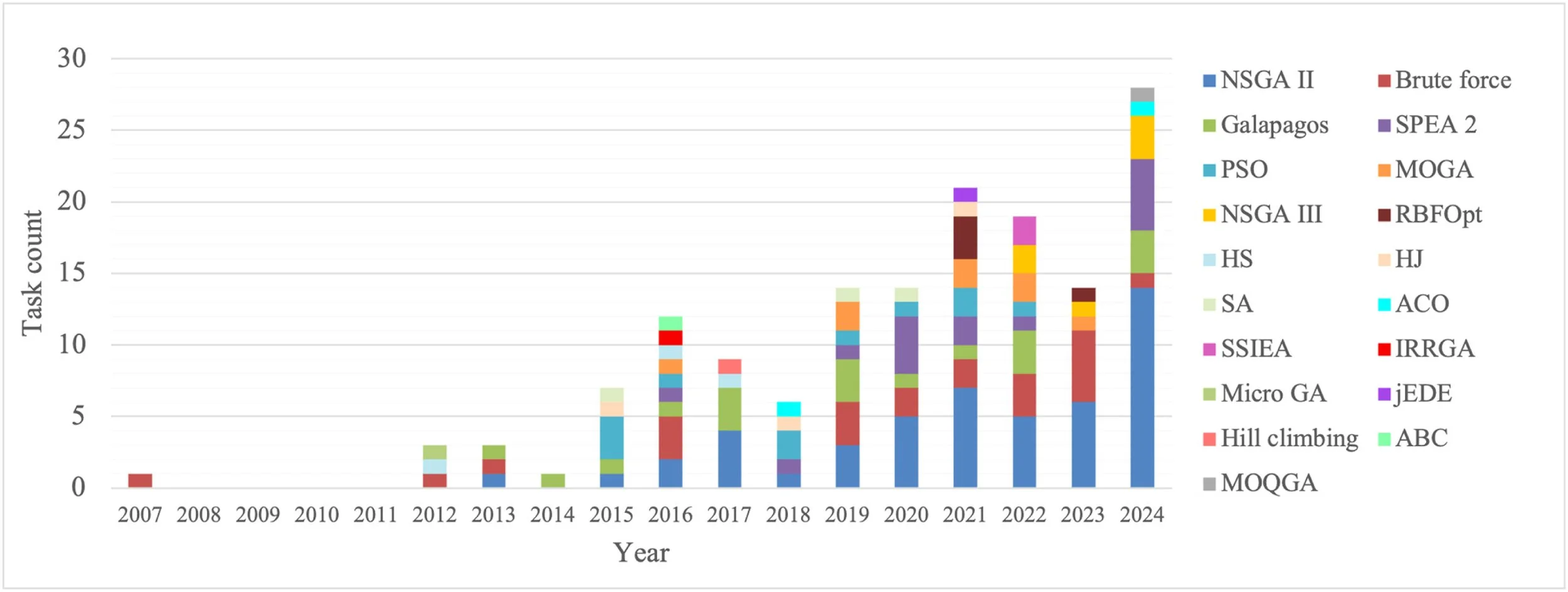
Focusing on the use of stochastic algorithms, Fig. 7 summarizes the results for the 155 analyzed optimization tasks, presenting the overall frequency of each algorithm as well as its temporal distribution. Many of them are transformations or extensions of others. While not practical problem-solving per se, this approach has been included in the study because it generates a set of possible solutions that are subsequently evaluated and compared, contributing to the overall decision-making process.
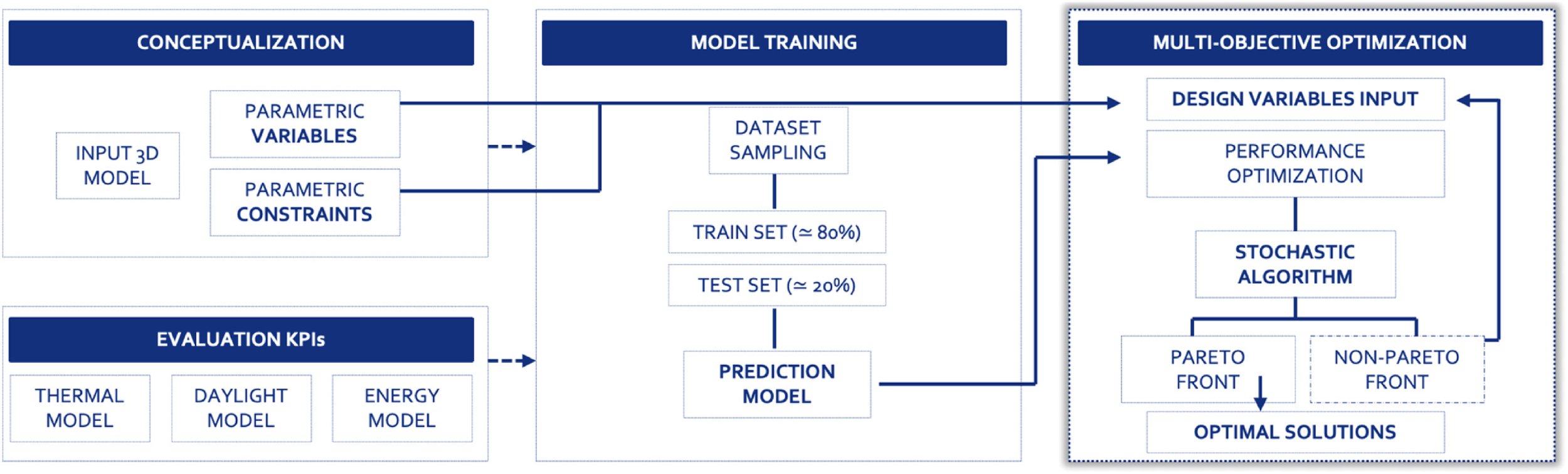
Fig. 6. Typical optimization workflow with integrated ML techniques.
3.3.3. Machine Learning-Based Models: Prediction Algorithms and Fine-Tuning
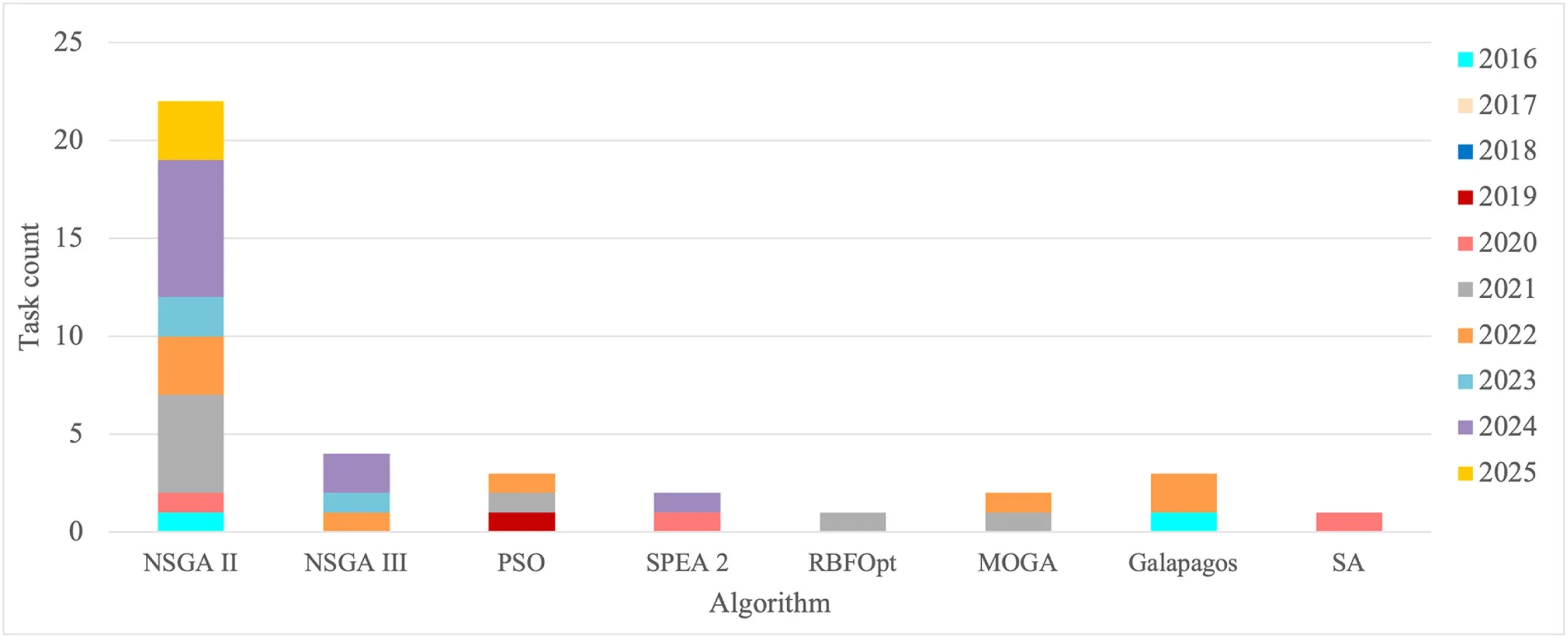
Various optimization algorithms have been combined with surrogate models. Within them, as shown in Fig. 8, NSGA-II once again stands out as the most used, revealing a clear upward trend in its adoption alongside surrogate models and a growing interest in the integration of ML techniques. Across the analyzed processes, surrogate models are typically built using supervised machine learning techniques. The most frequently employed models are Artificial Neural Networks (ANN), followed by Random Forest algorithms. Unsupervised learning methods are more commonly aimed at reducing data complexity during preparation or defining training and test sets for model development. In some cases, they are also employed for data analysis and solution mapping tasks. Nevertheless, further research is still needed to clarify the optimal performance of different optimization algorithms for each specific optimization problem.
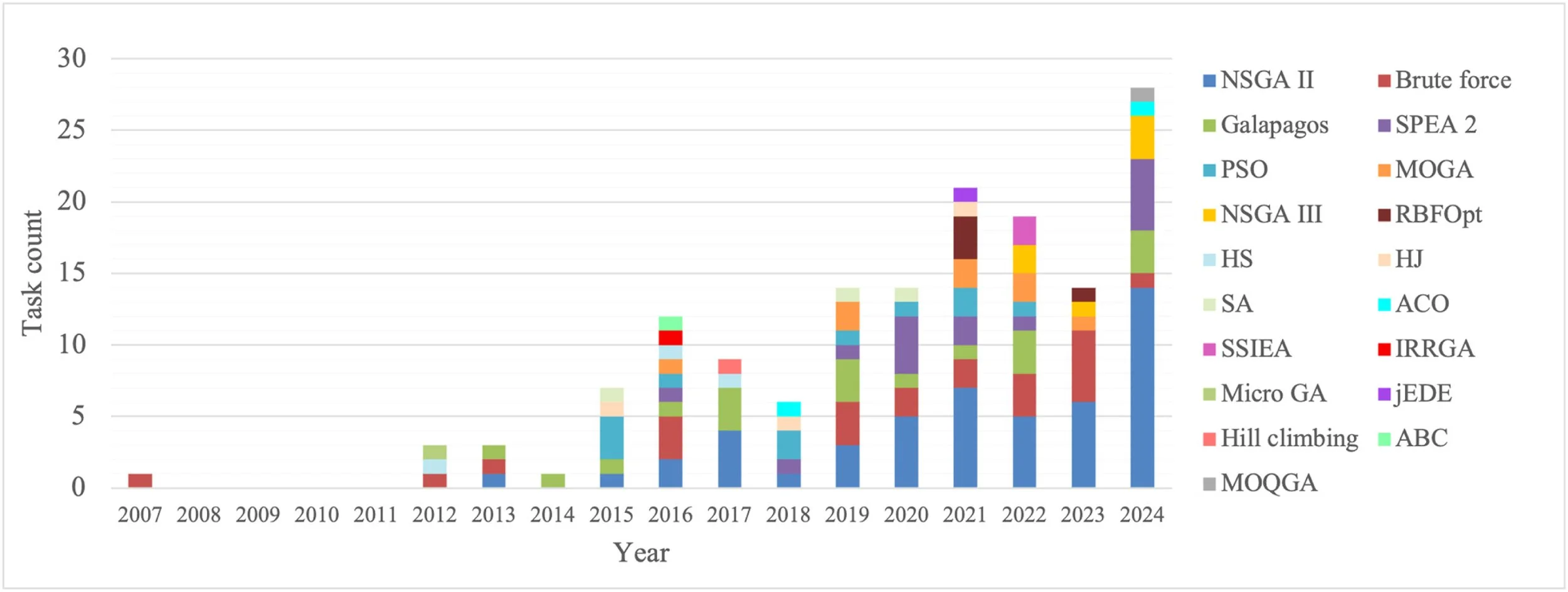
Fig. 7. Use of different stochastic algorithms by type and year of use.
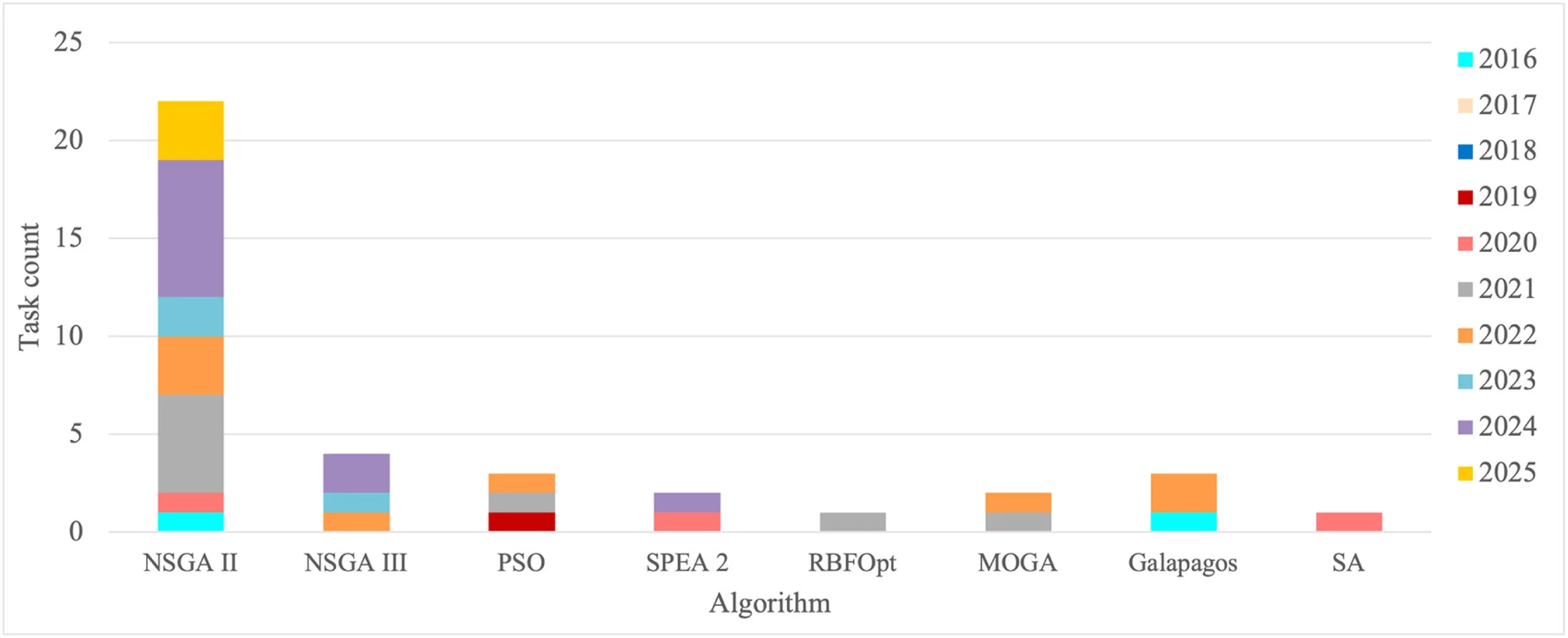
Fig. 8. Use of optimization algorithms combined with surrogate models: classification by type and year of use.
3.3.4. Multi-Criteria Decision-Making Algorithms
After defining the data used for analysis and decision-making, both in optimization and exploration workflows, the final step often involves applying decision-making processes. A total of 34.8% of the tasks reviewed incorporated some form of multi-criteria decision-making (MCDM) algorithm to balance and select the most appropriate solution, such as correlation analysis or TOPSIS. Half of the tasks that did not use decision-making algorithms relied on genetic algorithms or other heuristics or metaheuristics. A few tasks used manual selection methods or solely graphical data visualization.
Indeed, almost all the analyzed processes showed some kind of visualization output. Most used Pareto front representations or Parallel Coordinates Plots (PCP) to help interpret the impact of individual variables on outcomes, supporting decision-making processes. More conventional approaches, such as scatter plots, bar charts, and histograms, are also frequently used to communicate results clearly and effectively. This diversity of methods highlights a growing interest in automating and enhancing integrative performance-driven BE design, especially in workflows where multiple and potentially conflicting objectives must be resolved. However, some optimization workflows are designed to deliver a single optimal solution, which can be beneficial at specific design stages, but may limit creativity and integration within the architectural process. Exploratory workflows, supported by diverse visualization strategies, tend to enhance designer agency and multidimensional understanding, aligning better with the iterative and interpretive nature of architectural design.
3.4. Type of Problem, Type of Change, Design Scale, and Design Stage
In addition to the design variables, performance objectives, and optimization accelerators, and following Table 2, the tasks have been classified into four new categories relevant for assessing the emerging methods discussed in the reviewed articles: type of problem, type of change, design scale, and design stage. It is necessary to define the purpose of the optimization problem before selecting the appropriate performance-driven approach. The analyzed tasks were divided into two modes of reasoning: optimization, focused on refinement, and exploration, aimed at informed creativity. Sixty-nine percent of the analyzed tasks were exploratory processes.
Secondly, the nature of change in the design process shapes the link between existing and proposed solutions. It can be useful for understanding the design freedom within the process. Incremental change evolves from previous iterations, whereas non-incremental change redefines the design without direct reference to earlier versions. Sixty-four percent of the analyzed tasks were oriented toward non-incremental changes.
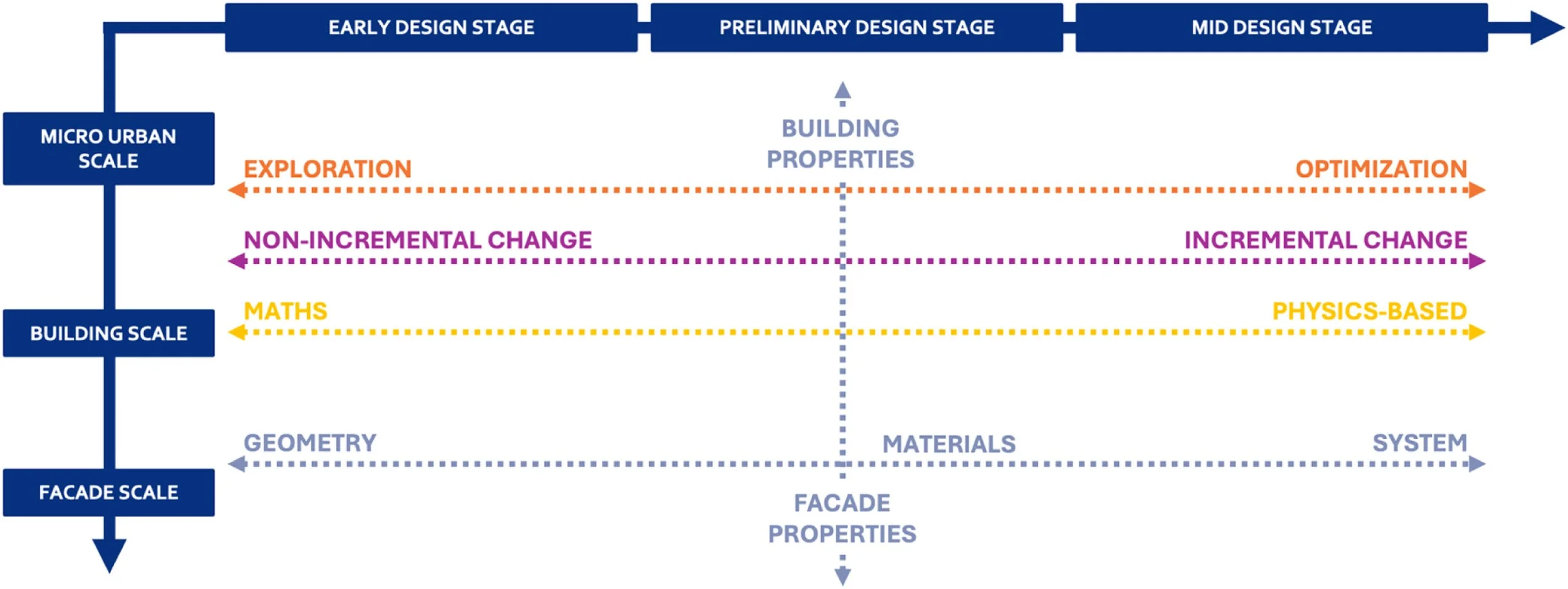
Thirdly, the scale of a design intervention shapes the specificity of the optimization problem and the resolution of the performance variables. Micro-urban scale may be related to neighborhoods, building form, and orientation. Building scale is oriented toward whole-system configurations or overall building geometries (including Window-to-Wall Ratio). The façade scale focuses on specific envelope components. Considering the design scale of the specific processes, 9% of tasks focus on the micro-urban scale, 39% focus on the building scale, and 52% focus on the façade scale.
Finally, the design stage in which a task occurs greatly influences the methods and tools used; it may clarify the depth, complexity, and purpose of the applied optimization strategies. Among the analyzed tasks, 37% were developed during early and preliminary design stages, and the remaining 25% were developed during mid-design stages. It could be stated that performing multi-objective optimization processes during early and preliminary design stages is more common and impactful.
In a combined scale-stage approach, 37.5% of the cases focused on the façade scale were optimized during the early and preliminary design stages, while 25% were optimized during the detailed design phase. The latter typically corresponds to refurbishment processes or specific optimization processes.
In contrast, the impact of BE design at the urban scale is typically not addressed during the detailed design stage. These insights suggest that urban-scale considerations could be meaningfully integrated into various design stages to enrich BE design processes.
4. Methodological Thinking Proposal
Rather than analyzing these scales or stages in isolation, it is important to highlight the potential of integrating them into a cohesive and interconnected workflow.
Methodological thinking in this case refers not only to single tasks proposed to solve a specific problem, but rather to sequential or integrated tasks that unveil design potential and its integration into design teams across different design stages. Table 3 presents the resulting analysis from those selected processes. Each example unveils different methodologies that can lead to performance-driven optimization in BE design. However, this review aims to define a generalizable framework that can facilitate and enhance the definition of new methodologies for BE design.
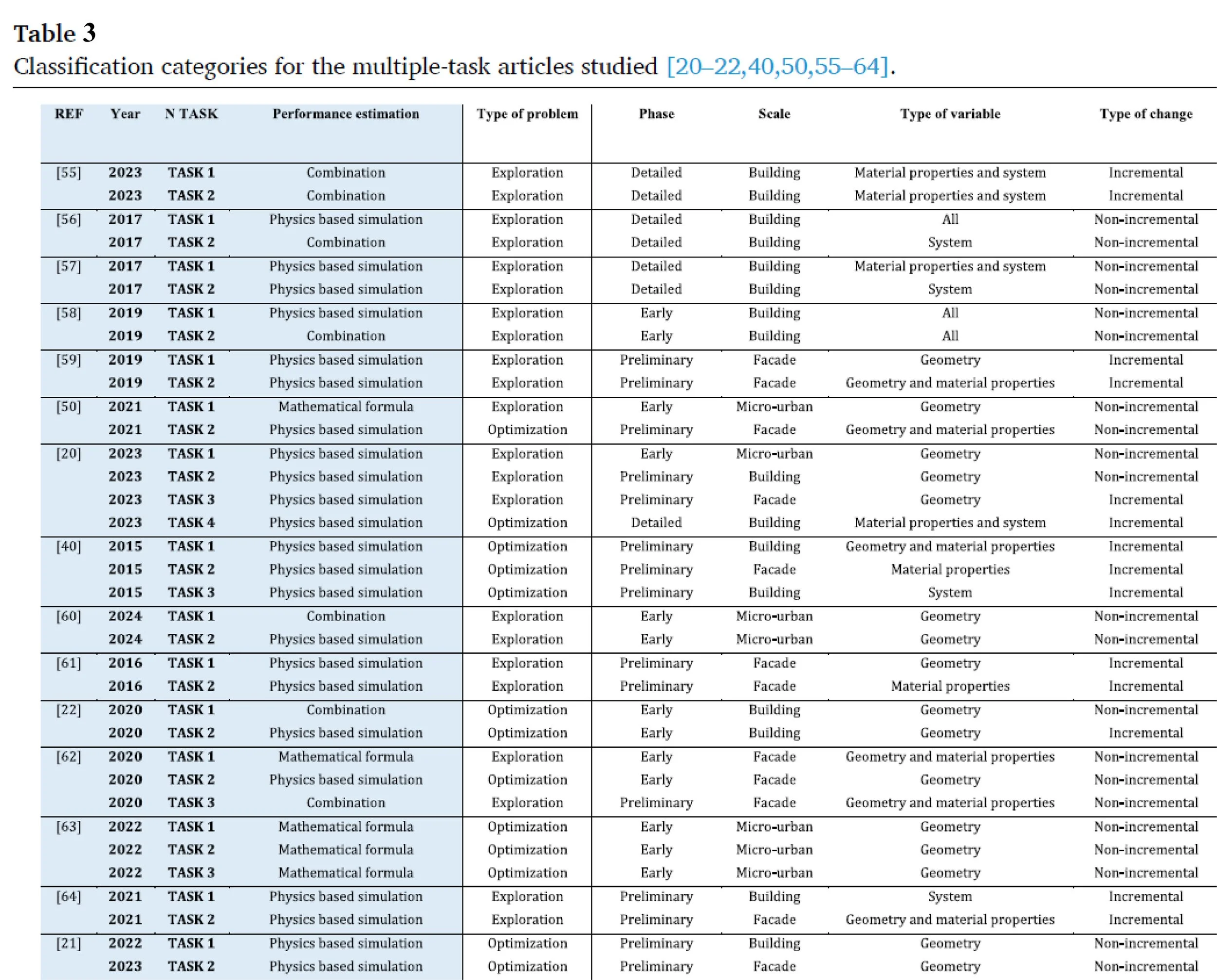
Table 3 Screenshot
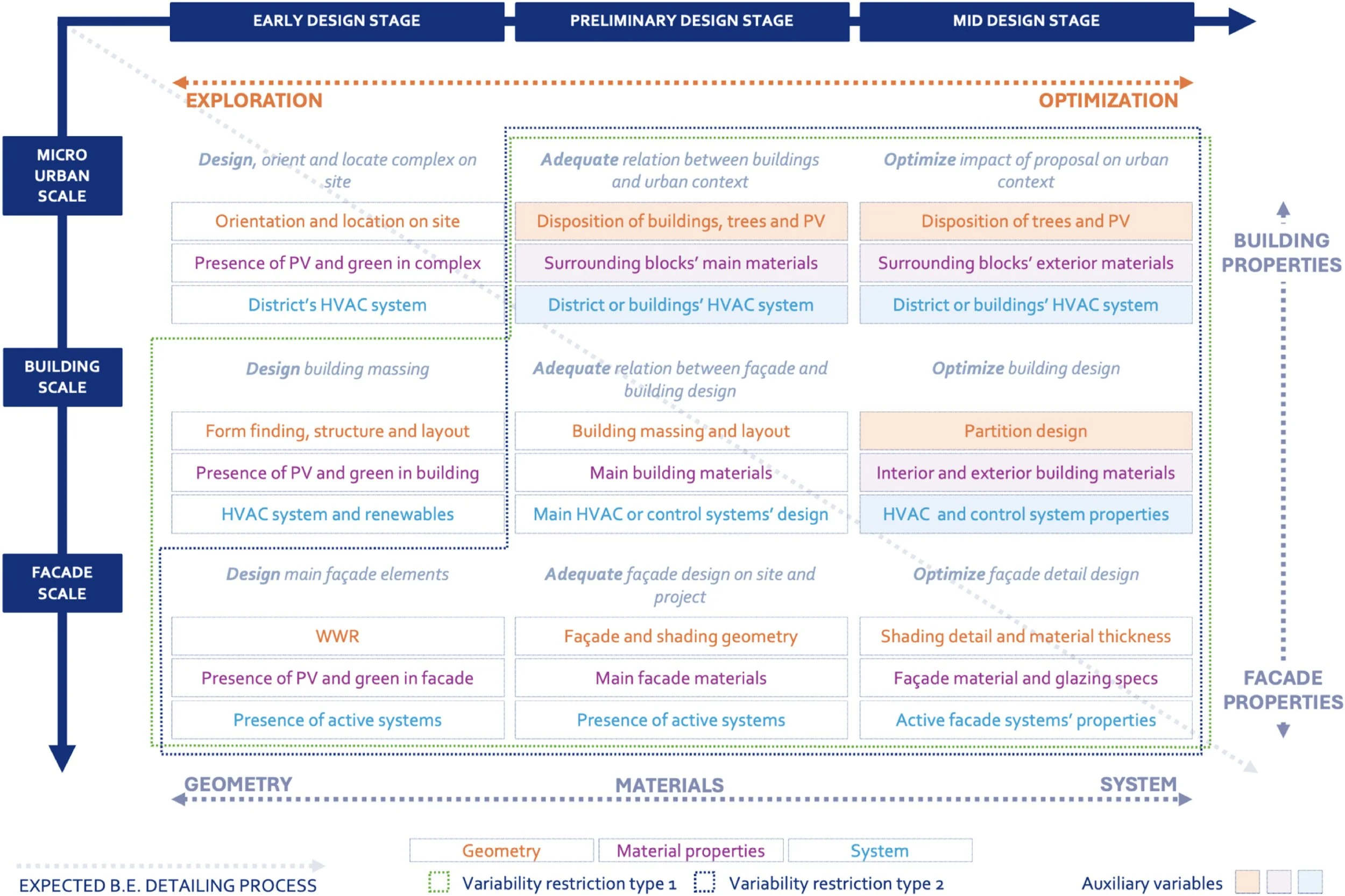
With the aim of proposing a flexible methodology, the sequential examples presented, along with other independent tasks, have been analyzed in terms of their underlying logic. The matrix shown in Fig. 9 summarizes the possible types of problem-solving approaches for each design phase and scale in performance-driven BE design. This matrix illustrates how the proposed methods can be guided by design stages, design scales, or a combination of both. Having studied the different possibilities presented in the literature, a deeper analysis is conducted to examine specific variables and performance objectives that could be considered at each design stage and scale.
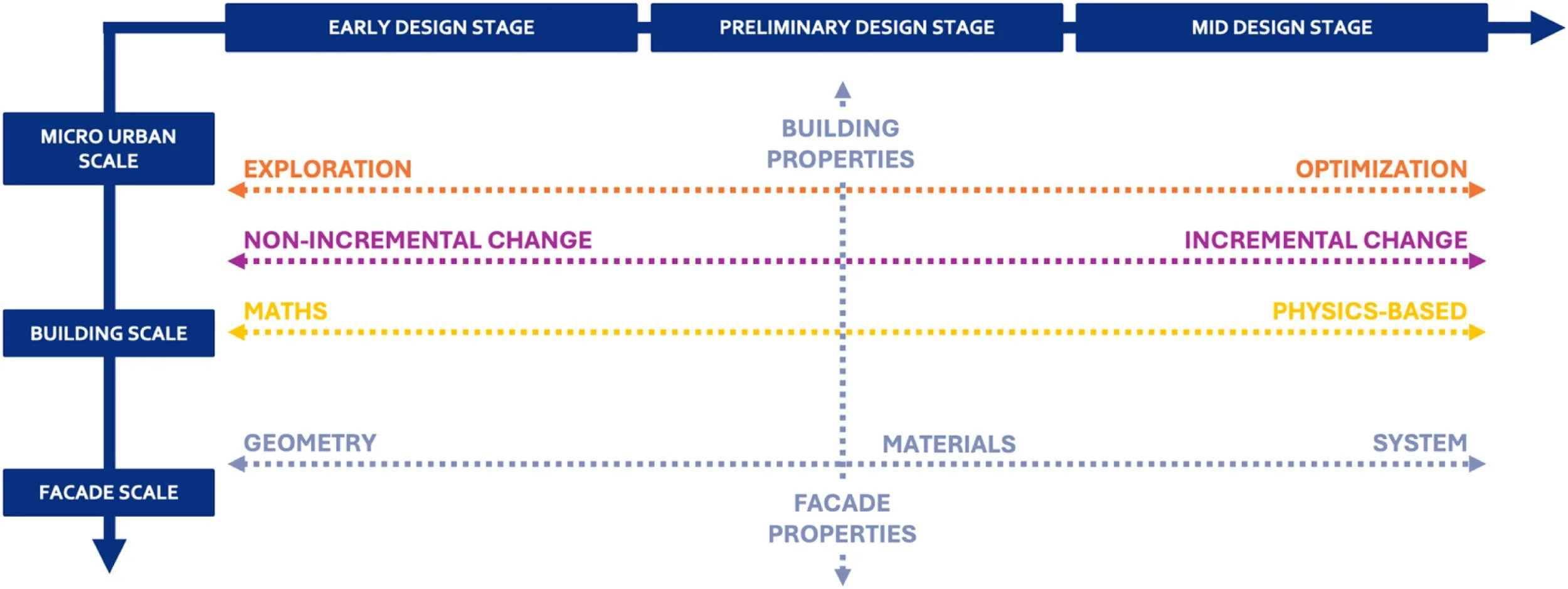
Fig. 9. Design process categorization by project stage and scale.
This review presents a classification of variable types by design stage and design scale, offering a broader overview of the challenges of BE performance-driven design.
The reviewed articles and tasks do not cover the full range of combinations with enough examples. For that reason, a thorough analysis has been conducted of the existing examples, considering the three classified variable types and the possible studied combinations. Table 4 shows the results of the analysis, which now guide the new proposal of variable types to be considered by design stage and scale in BE design optimization.

Table 4 Screenshot
The same process has been applied to analyze the frequency and distribution of performance objectives across design stages and scales. The results are shown in Table 5. The relevance of energy objectives in all cases is remarkable, as well as the frequent combination of energy, thermal comfort, and visual comfort in early design stages. However, in the case of performance objectives, the process is directly related to client needs, designer decisions, and problem-specific constraints. Due to the underrepresentation of some relevant performance objectives, this review only records the potential performance metrics identified in each category and, adopting a frequency-based perspective, proposes a set of relevant performance classes to be considered by design scale (Fig. 10).
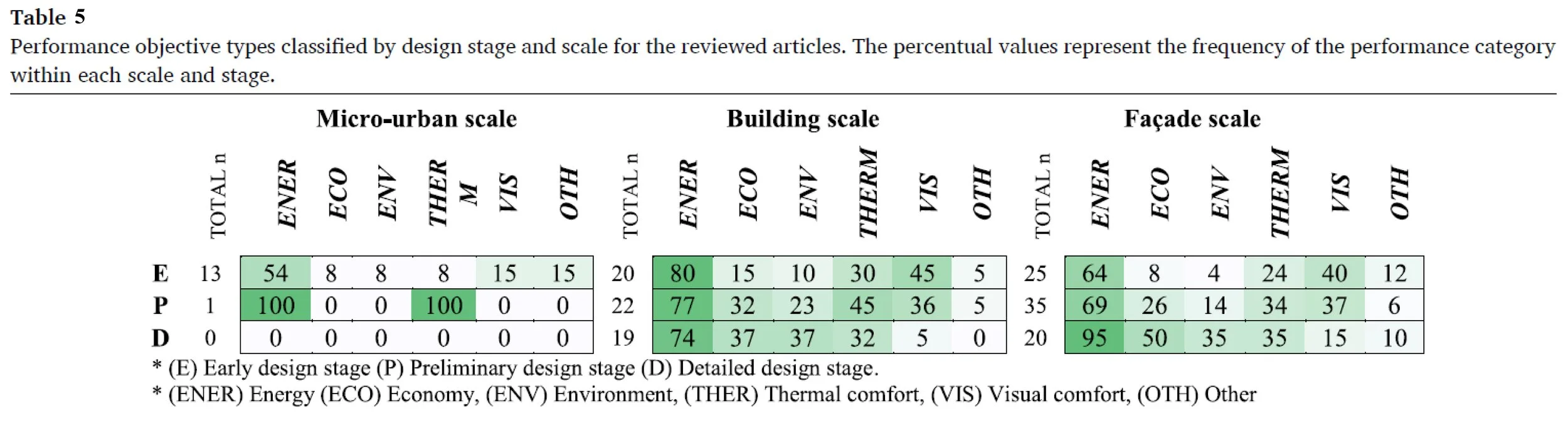
Table 5 Screenshot

Fig. 10. Performance objective classes proposed by design scale.
Considering optimization variables, design objectives, and key findings across different design stages and spatial scales, a complementary matrix is proposed. The selection of variable types and performance objectives should be determined by the designer at the start of each design process. Nevertheless, the proposed matrix provides specific and valuable insights for variable definition:
• The process is guided by the overarching objective established for each combination of design stage and scale.
• A guiding line is established to define the logically expected detailing process. This approach distinguishes between main design variables, located below the line, and secondary supporting variables, positioned above it.
• Before defining the variables to be considered in the design process, it is essential to determine the degree of freedom available to the designer at the starting point. This reveals two types of variability restrictions: in certain situations, only the façade can be designed from scratch; in others, both the façade and the massing; and in some cases, the entire set—including urban distribution, building massing, and façade design—can be freely defined.
• The variables considered during the early and preliminary stages often indicate the presence or absence of specific materials or systems rather than detailing their characteristics.
All these considerations lead to the proposal of the variable matrix shown in Fig. 11. This matrix could be extended and detailed depending on project conditions.
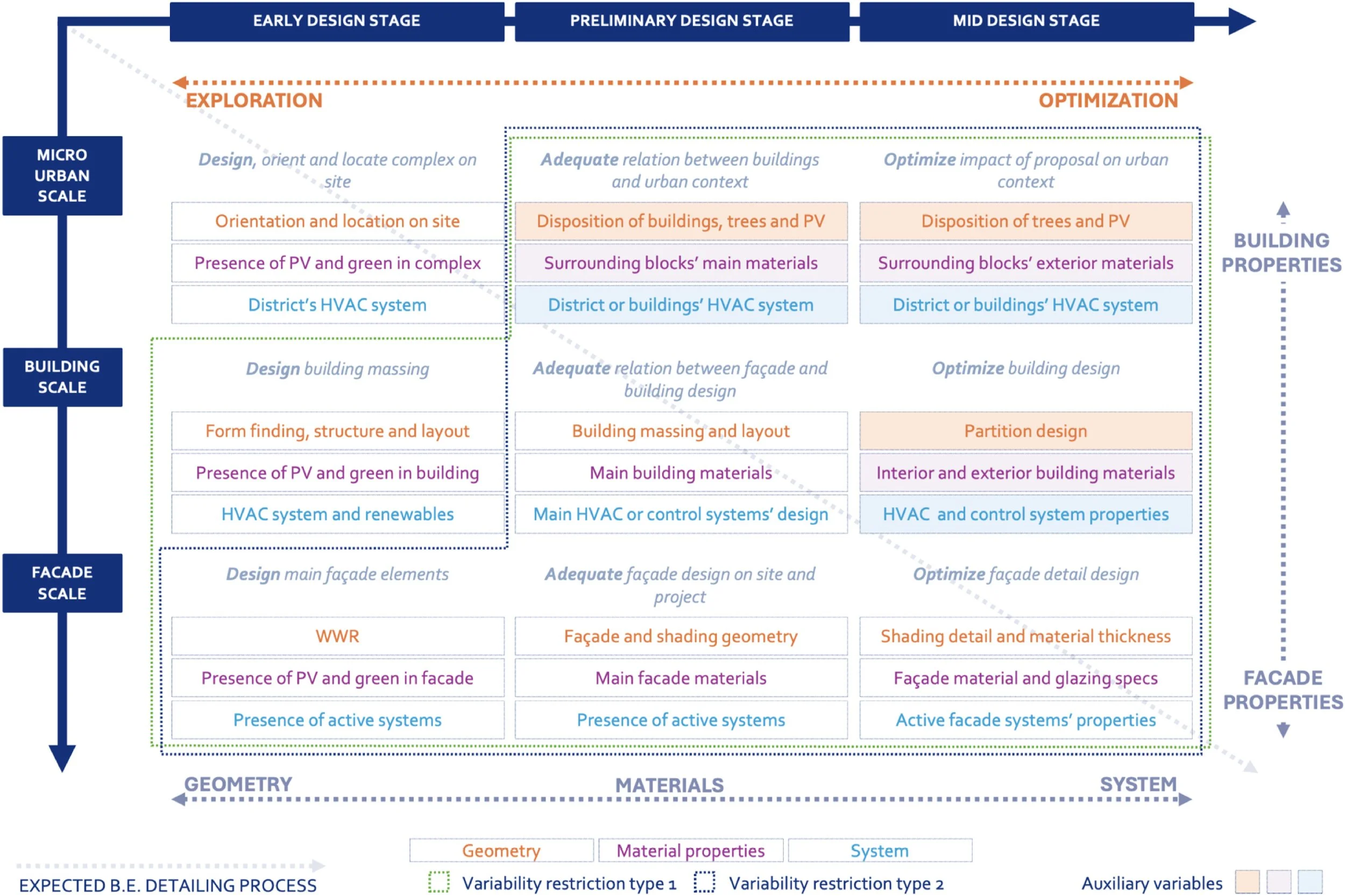
Fig. 11. Matrix of proposed optimization variables classified by design stage and project scale.
Finally, based on the defined task parameters—scale, stage, variables, objectives, or constraints—and the analyzed accelerators, a modular methodological matrix is proposed. As shown in Fig. 12, it enables designers to flexibly combine tools and methods, adapting to every possible problem and promoting collaboration among architects, engineers, and data scientists in performance-driven design.
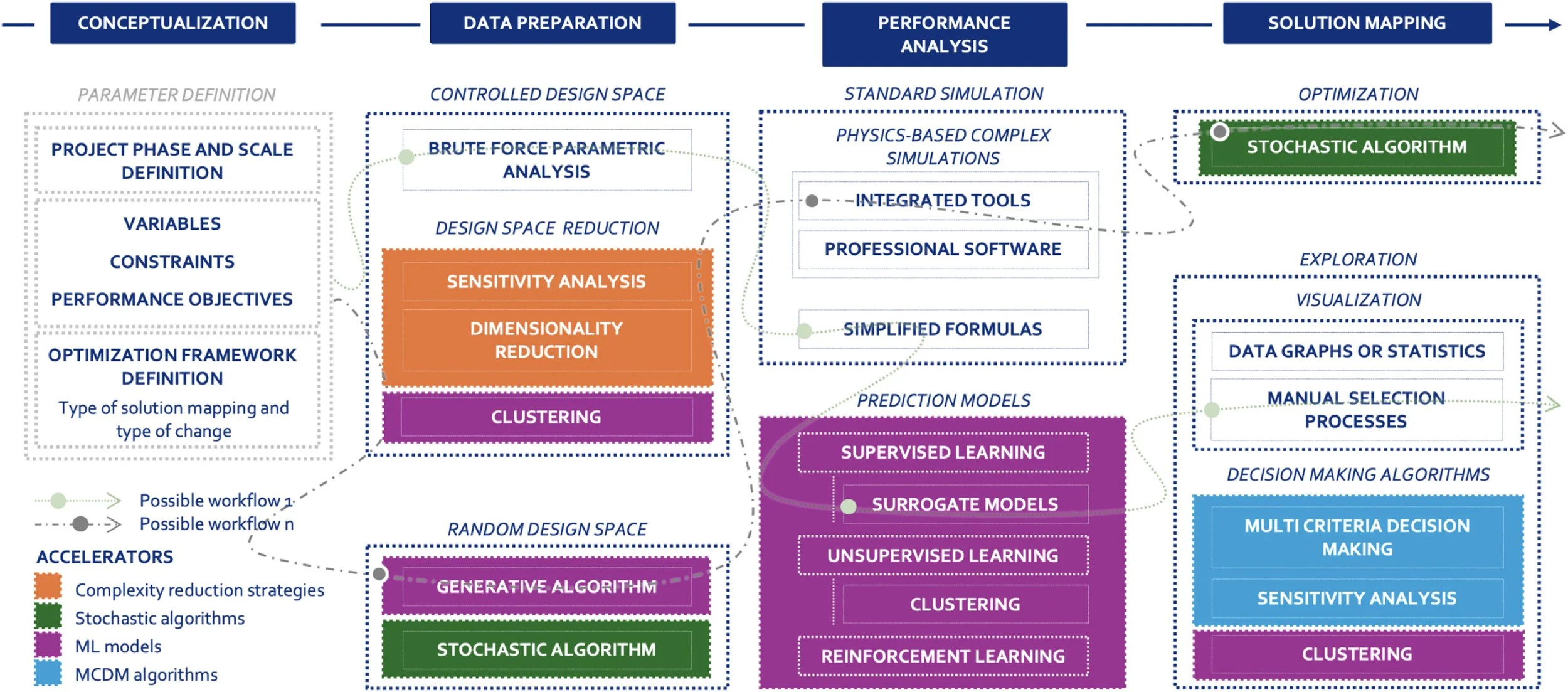
Fig. 12. Methodological matrix and potential flexibility for data-driven BE design tasks.
5. Discussion
Having analyzed the underlying tasks in the reviewed articles, some considerations seem relevant to advancing the integration of performance-driven optimization methods into more flexible and designer-oriented workflows. This research primarily focuses on the methodological thinking behind sequential or integrated tasks that unveil design potential and facilitate its integration into design teams.
Some relevant studies explore sequential or multi-scale optimization processes that adapt to different variable types or combine methods across stages. These cases suggest a move toward a more interconnected and responsive approach to façade optimization.
Pursuing exploration processes, aiming for algorithmic design, and seeking integrated workflows across design stages require structuring the design process and its related data through a parametric approach. This has been clearly exemplified in the integration of aesthetic considerations into the design process. The best way to integrate aesthetics as an objective is by structuring the parametric process with clear design variables and design constraints. Computing time has been proven to be reduced in different ways: (a) controlling the number of objectives, variables, and constraints; (b) correctly identifying the simulation objectives and corresponding engines; and (c) using machine learning algorithms.
Controlling the design parameters is highly related to the stage and scale at which the process is conducted, so clear methods regarding the variables and performance objectives to be considered at each stage and design scale are valuable for enhancing BE performance-driven optimization. However, these methods should be as flexible as possible so as not to hinder creativity.
Machine Learning (ML), particularly through surrogate models and other techniques, is identified as a promising accelerator.
However, adopting these methodologies often demands expertise in data analysis, algorithms, and ML, making data literacy essential. In this context, democratizing optimization tools through intuitive interfaces and low-code platforms is a crucial step.
A major challenge revealed by this review lies in the limited inclusion of qualitative or subjective design criteria in BE design, such as aesthetics, spatial quality, or user experience. Bridging the gap between computational optimization and architectural reasoning requires better interfaces and hybrid methodologies that allow the integration of qualitative input, where the designer acts as an active agent.
This review, therefore, attempts to pave the way toward clear and flexible BE performance-driven optimization workflows by suggesting two matrices that can guide workflow decisions: a matrix of possible algorithm combinations that define a design task and a matrix of design variables to be optimized at every design stage and design scale of a BE project.
The findings of this review not only shed light on current methodological trends but also reveal opportunities for improving the efficiency, flexibility, and designer orientation of optimization processes in BE design.
6. Limitations and Suggestions for Further Work
Several limitations have been found in the proposed methodological framework. Consequently, avenues for future research are recommended:
• Performance objective metric appropriateness: The framework shows limitations in the contextualization and definition of performance metrics. Research is needed to develop metric hierarchies or stage-dependent KPIs.
• Tool-stage matching: There is still a lack of knowledge for constructing a clear map of how specific algorithms are used within different design stages and scales. There is a need to define guidelines for selecting algorithms and performance estimation methods according to design stage (early, schematic, detailed) and scale (urban, building, envelope). Maintaining simulation faithfulness while significantly reducing computational load should be further explored.
• Algorithm benchmarking and hybrid strategies: Regarding the technical development of algorithms, following the “No Free Lunch Theorem,” there is no optimal algorithm for all optimization problems [42]. More systematic benchmarking is needed to establish when and why certain algorithms perform better. The potential of hybrid approaches also remains untested for specific cases.
• Human–AI interaction in design: Visualization and interaction have been only briefly addressed, without distinguishing which visualization types are most appropriate depending on the design stage or audience. Empirical studies evaluating real-world Human–AI interaction processes would provide valuable insights into their effectiveness and usability.
• Robustness and uncertainty assessment: Robustness and uncertainty have been insufficiently considered. Further research should integrate uncertainty quantification and robustness assessment to improve decision reliability under changing climate conditions and contextual variability.
7.Conclusions
The review proposes a clear opportunity: combining multiple optimization tasks within a unified, stage-aware methodology could enhance usability for practitioners and integration in architectural workflows. The proposed matrices of interconnected methods offer a structured yet flexible approach to BE design optimization, supporting both research and practice in navigating complex, multi-objective design scenarios.
Gallery